A commercial security system can continue working for years without actually providing the level of protection your business needs today.
Cameras may still record. Access cards may still open doors. Alarms may still trigger when something happens. But security technology evolves quickly, and systems that were considered adequate a few years ago may now leave businesses with blind spots, slow response times, or limited visibility.
The challenge is knowing when your existing system has reached that point.
Here are several signs that your commercial security system may be outdated and what to consider before replacing or upgrading it.
1. Your Security Cameras Produce Poor Quality Footage
One of the easiest ways to identify an outdated security system is to look at the quality of your surveillance footage.
If your cameras produce blurry images, struggle in low light conditions, or make it difficult to identify faces, license plates, or other important details, your system may no longer be meeting your security needs.
Modern commercial surveillance cameras can provide significantly better image quality, wider coverage, improved low light performance, and advanced analytics.
Ask yourself:
- Can you clearly identify a person in your camera footage?
- Can you read license plates when necessary?
- Are there dark areas around your property that cameras cannot adequately cover?
- Do you have to zoom in on footage only to find that the image becomes unusable?
If the answer is yes to several of these questions, it may be time to evaluate your surveillance system.
2. Your Cameras Have Blind Spots
Technology is not the only issue. Camera placement and coverage can become outdated as your business changes.
A facility may have added new entrances, parking areas, storage spaces, equipment, or buildings since the original security system was installed. The existing camera layout may no longer reflect the way the property is used.
Walk through your facility and consider areas such as:
- Main entrances and exits
- Employee entrances
- Parking lots and garages
- Loading docks
- Restricted areas
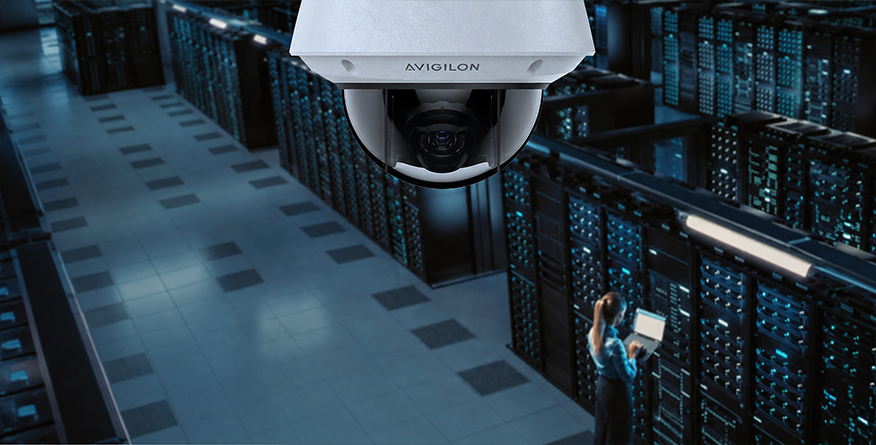
- Server and equipment rooms
- Warehouses
- Perimeters
- Cash handling areas
If important areas are not being monitored or if cameras are positioned in ways that create significant gaps, your security system may need more than a simple camera replacement.
It may need a security assessment and redesign.
3. Your Access Control System Relies on Outdated Technology
Access control is another area where older systems can create problems.
If your organization still relies heavily on traditional keys, outdated proximity cards, or a system that is difficult to manage, controlling who can enter specific areas can become unnecessarily complicated.
Modern access control systems can provide centralized management and more detailed visibility into access activity.
Depending on the system, organizations may be able to manage:
- Employee credentials
- Visitor access
- Restricted areas
- Access schedules
- Door activity
- User permissions
- Lost or deactivated credentials
An outdated access control system can also make employee turnover more difficult. When someone leaves the organization, security teams need to be confident that their access has been removed promptly.
4. You Cannot Manage Your Security System Remotely
Older security systems are often heavily dependent on local hardware and manual monitoring.
That can become a problem when security personnel need information quickly.
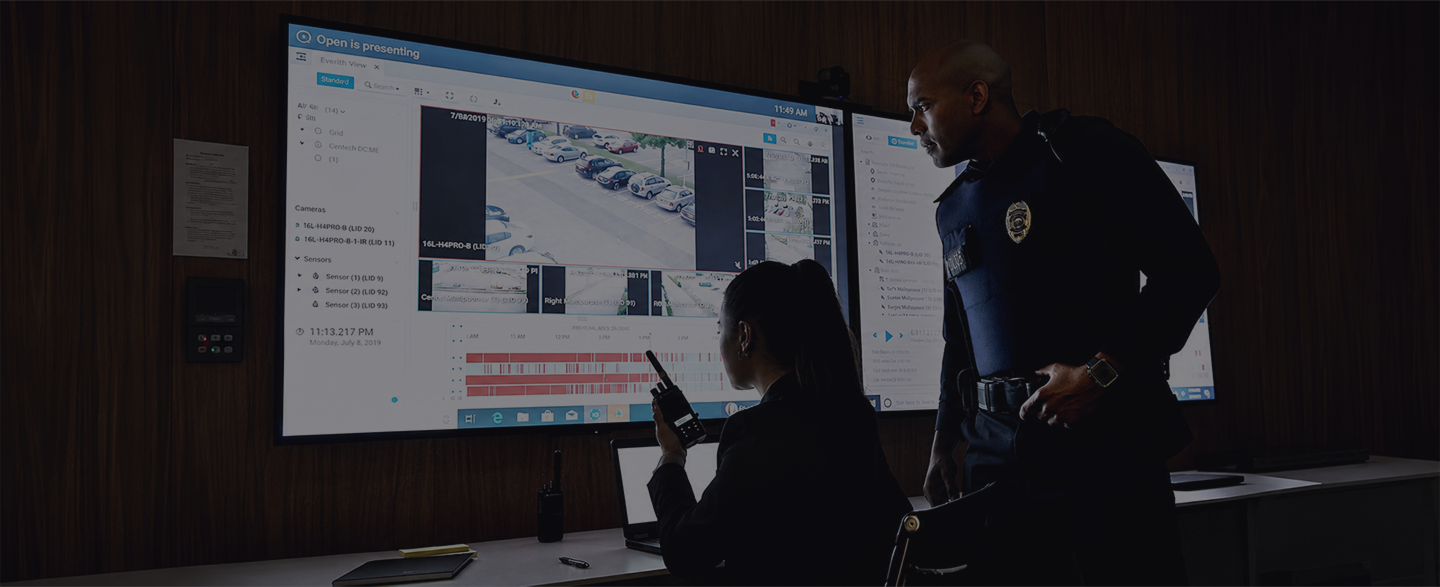
Modern systems can provide remote access and centralized management, allowing authorized personnel to review cameras, manage access permissions, monitor events, and receive alerts without being physically located next to the security equipment.
For organizations with multiple buildings or locations, centralized management can be especially valuable.
If your security team has to physically access a computer or security room every time they need to investigate an event, your system may be limiting your ability to respond efficiently.
5. Your Security Systems Do Not Work Together
A commercial property may have several different security technologies operating at the same time:
- Video surveillance
- Access control
- Intrusion detection
- Intercoms
- Alarm systems
- Perimeter security
- Gunshot detection
- Environmental monitoring
The problem occurs when these systems operate independently.
For example, an access control event might occur at a restricted door, but your security team may have to manually search through camera footage to determine what happened.
An integrated security system can allow different technologies to work together, giving security personnel a more complete picture of an incident.
If your team constantly has to switch between different platforms to investigate basic security events, it may be worth evaluating whether your systems can be integrated.
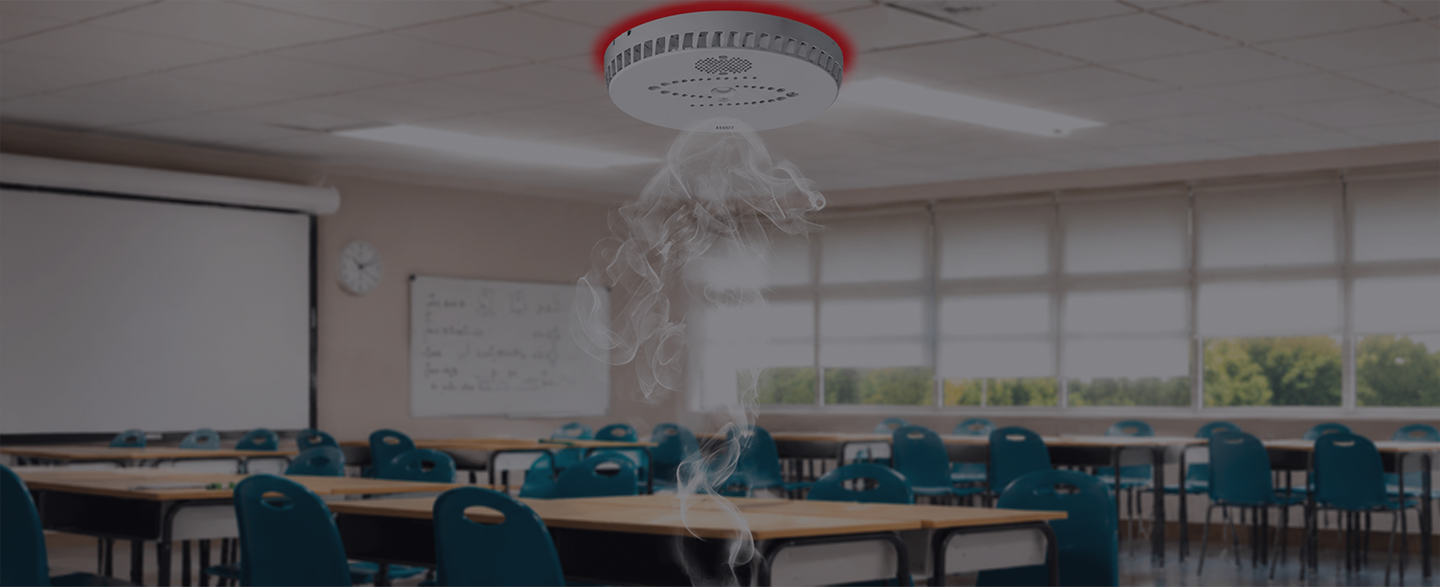
6. Your System Generates Too Many False Alarms
False alarms are not just inconvenient. They can reduce the effectiveness of your security operation.
If your intrusion detection or other security systems regularly generate false alerts, employees may begin treating notifications as routine rather than urgent.
This can lead to alert fatigue and make it harder to identify genuine threats.
Frequent false alarms can result from outdated equipment, poor sensor placement, environmental factors, configuration issues, or technology that is not appropriate for the environment.
Before replacing everything, have the system evaluated. Sometimes the problem can be addressed through better configuration or targeted upgrades.
7. Your Security Team Has Limited Visibility
A modern security system should help your team understand what is happening, not simply tell them that something happened.
For example, receiving an alarm that a door has been opened provides limited information.
Being able to associate that event with access credentials, video footage, location, and other relevant information provides a much clearer picture.
If your current system gives your security team very little context when an event occurs, its capabilities may no longer match your operational requirements.
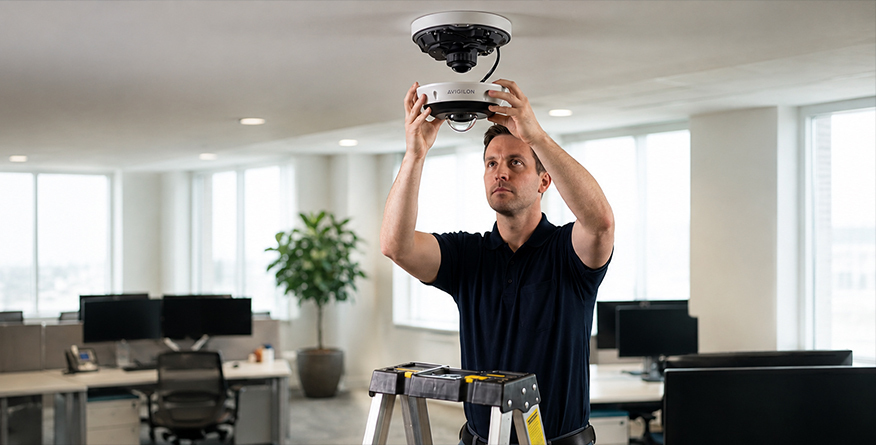
8. Your Equipment Is Becoming Difficult to Maintain
Another warning sign is when maintaining the security system becomes increasingly difficult.
Consider:
- Are replacement parts difficult to find?
- Is the manufacturer no longer supporting your equipment?
- Are repairs becoming more frequent?
- Does your security team depend on one person who understands how the system works?
- Are older components incompatible with newer technology?
- Is your system running on software that is no longer supported?
A system does not necessarily need to be replaced simply because it is old. However, unsupported equipment can become a serious concern when failures occur.
The longer an outdated system remains in place, the more difficult it may become to maintain and expand.
9. Your Business Has Changed, but Your Security System Has Not
Your security system should evolve with your business.
If you have expanded your facility, changed the layout, added employees, introduced new operations, or started using previously restricted areas differently, your original security design may no longer be appropriate.
For example, a system designed for a small office may not provide sufficient coverage after the business expands into a larger facility.
Similarly, a warehouse that has added new loading areas or high value inventory may require additional surveillance and access controls.
A good question to ask is:
If we designed our security system for this facility today, would we design it the same way?
If the answer is no, it is worth reassessing your current system.
10. You Do Not Know What Your System Can Actually Do
This is an overlooked warning sign.
If your security team does not fully understand what the existing system can monitor, detect, record, or report, you may not be getting the value you are paying for.
Over time, systems can accumulate outdated equipment, unused features, disconnected components, and workarounds.
A professional security assessment can help identify:
- What is currently working
- What is not working
- Where coverage gaps exist
- Which equipment is outdated
- Which components can be upgraded
- Where integration is possible
- What should be replaced
This can be more useful than automatically replacing the entire system.
Does an Outdated Security System Mean You Need to Replace Everything?
Not necessarily.
One of the biggest misconceptions about upgrading commercial security is that businesses need to completely remove their existing system and start over.
In many cases, a phased upgrade may make more sense.
For example, a business could prioritize critical areas first:
- Replace outdated cameras
- Improve access control at sensitive entrances
- Address major coverage gaps
- Integrate disconnected systems
- Upgrade monitoring and management capabilities
This approach can allow organizations to improve security while managing costs and minimizing disruption.
The right solution depends on the existing infrastructure, facility layout, security risks, and operational requirements.
When Should You Evaluate Your Commercial Security System?
You do not have to wait for a security incident or complete equipment failure before evaluating your system.
A security assessment can be useful when:
- Your equipment is several years old
- Your business has expanded
- You have experienced security incidents
- Your cameras have significant blind spots
- Your access control is difficult to manage
- Your systems operate independently
- Your equipment is no longer supported
- Your team experiences frequent false alarms
- You are planning a renovation or facility expansion
The objective is not simply to install newer technology.
It is to make sure your security infrastructure is aligned with how your business operates today.
Upgrade Your Commercial Security System Before It Becomes a Problem
An outdated security system is not always obvious. Sometimes everything appears to be working normally while the system quietly develops gaps in coverage, outdated technology, poor integration, or maintenance problems.
The best time to identify those issues is before they contribute to a serious security incident.
At Electro Specialty Systems, commercial security systems can be evaluated based on your facility, operations, and security requirements. From video surveillance and access control to integrated security solutions, the goal is to build a system that provides your team with the visibility and control needed to protect your organization.
Think your commercial security system may be outdated? A professional assessment can help you identify what needs to change and what does not.