The Future of Safety: The Top Security and Operational Benefits of Facial Recognition
In an era where security threats are increasingly sophisticated, traditional safeguarding methods like keys, passwords, and ID badges are no longer enough. They can be lost, stolen, or duplicated. Enter facial recognition technology (FRT) , a biometrics-driven solution that is rapidly transforming how organizations protect their assets, data, and people.
By mapping unique facial features and converting them into mathematical data, facial recognition offers a frictionless, highly accurate, and automated way to verify identity.
Below, we explore the comprehensive security and operational benefits of facial recognition, outlining why it has become an indispensable tool for modern enterprises and public infrastructure.
The Core Security Benefits of Facial Recognition
At its foundation, facial recognition is a security-first technology. It eliminates many of the vulnerabilities inherent to human error and legacy security systems.
The process is designed for maximum user convenience and high-throughput environments:
- Unforgivable Identity Verification: Unlike passwords or keycards, your face cannot be forgotten at home, shared with a coworker, or stolen by a bad actor. FRT ensures that the person attempting to gain access is exactly who they claim to be.
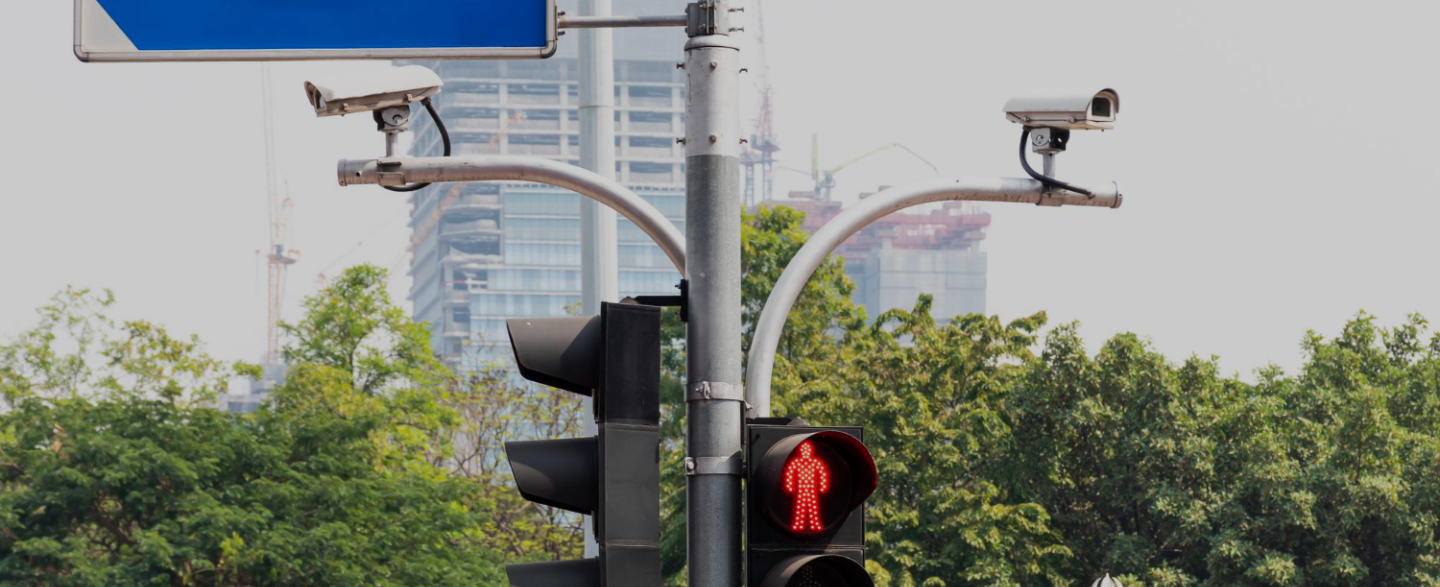
- Proactive Threat Detection: Integrated with CCTV networks, facial recognition software can scan crowds or entry points in real-time and instantly match faces against a “watchlist” of banned individuals, terminated employees, or known suspects. Security teams are alerted immediately, allowing them to prevent incidents before they escalate.
- Automation of Surveillance: Human guards can suffer from fatigue, distraction, and cognitive overload when watching dozens of camera feeds. Facial recognition operates 24/7 with consistent precision, flagging anomalies and unauthorized individuals automatically.
- Conclusive Forensic Auditing: If a security breach occurs, combing through hundreds of hours of video footage manually can take days. Facial recognition allows investigators to search video databases by a specific face, tracking a suspect’s movements across a facility in a matter of seconds.
Security and Operational Use Cases
The true value of facial recognition lies in its versatility. It simultaneously hardens an organization’s security posture while streamlining day-to-day operations.
1. Enterprise Access Control
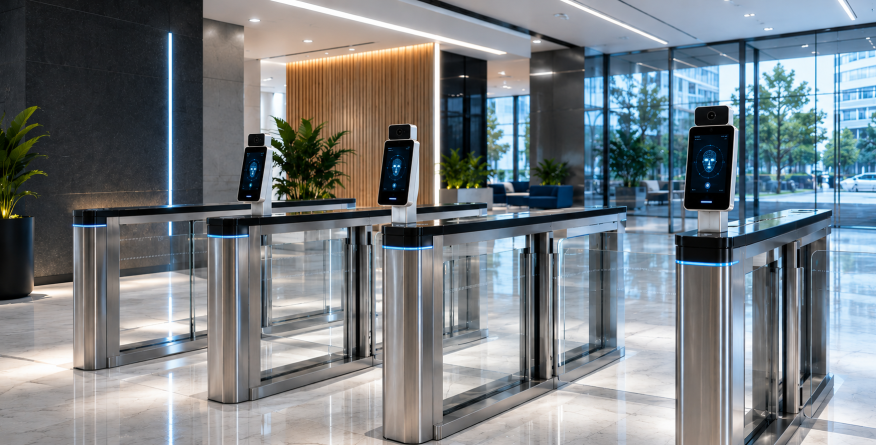
Traditional access control relies on “what you have” (a badge) or “what you know” (a PIN). Facial recognition switches this to “who you are.”
- Anti-Tailgating: FRT can detect when an unauthorized person slips through a secure door behind an employee, instantly triggering an alert.
- High-Security Zones: For server rooms, executive suites, or research labs, facial recognition can act as a standalone lock or part of a multi-factor authentication (MFA) protocol.
2. Public Safety and Law Enforcement
Governments and transit authorities leverage facial recognition to protect large-scale public infrastructure.
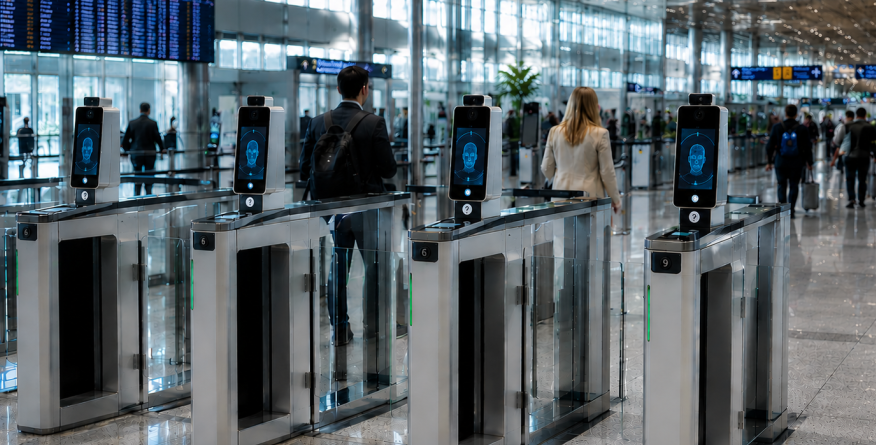
- Border Control and Airports: Biometric passports and facial scanning at checkpoints speed up customs processing while catching individuals traveling on forged documents.
- Missing Persons & Amber Alerts: Law enforcement can use the technology to scan public feeds for missing children or vulnerable adults, saving critical time during active searches.
3. Smart Retail and Loss Prevention
Retailers face billions of dollars in losses annually from organized retail crime. Facial recognition provides a non-disruptive shield.
- Shoplifter Identification: When a known repeat offender enters a store, the system quietly alerts floor managers or asset protection teams to monitor the individual.
- VIP Recognition: On the operational side, the same technology can identify loyal, high-value customers as they walk in, allowing staff to provide personalized concierge service.
4. Workplace Efficiency and Time Attendance
Facial recognition bridges the gap between security compliance and operational convenience for HR and operations managers.
- Eliminating “Buddy Punching”: In manufacturing, construction, and corporate offices, employees sometimes clock in for late or absent colleagues. Facial recognition attendance clocks ensure precise payroll auditing by verifying physical presence.
- Touchless Check-In: In a post-pandemic world, frictionless entry minimizes physical contact with shared surfaces like scanners or keypads, creating a healthier environment.
Balancing Security with Privacy
While the benefits of facial recognition are undeniable, responsible deployment is critical. Organizations looking to implement FRT must prioritize data privacy and ethical standards.
- Transparency: Transparency remains a fundamental best practice when deploying facial recognition technology. Clear signage indicating that facial recognition is in use helps ensure that employees, visitors, and customers are aware of its presence and purpose.
- Data Encryption: Protecting biometric data is essential. Facial templates (the mathematical vectors, not the actual photos) should be encrypted both in transit and at rest to help safeguard sensitive information and maintain system integrity.
- Opt-In/Opt-Out Policies: Where applicable, biometric programs should support opt-in or opt-out participation. Providing alternative verification methods for employees or customers who object helps balance security objectives with privacy considerations.
Conclusion: A Seamlessly Secure Tomorrow
Facial recognition is no longer a futuristic concept reserved for sci-fi movies. It is a tangible, highly efficient reality. By automating identity verification and threat detection, it allows businesses and public entities to operate with a level of confidence that traditional security simply cannot provide.
When deployed ethically and transparently, facial recognition doesn’t just protect spaces; it optimizes them, creating a safer, faster, and more seamless experience for everyone involved.
Reach out to Electro Specialty Systems today to learn how your organization can benefit from facial recognition.