Moving Beyond Legacy Hardware
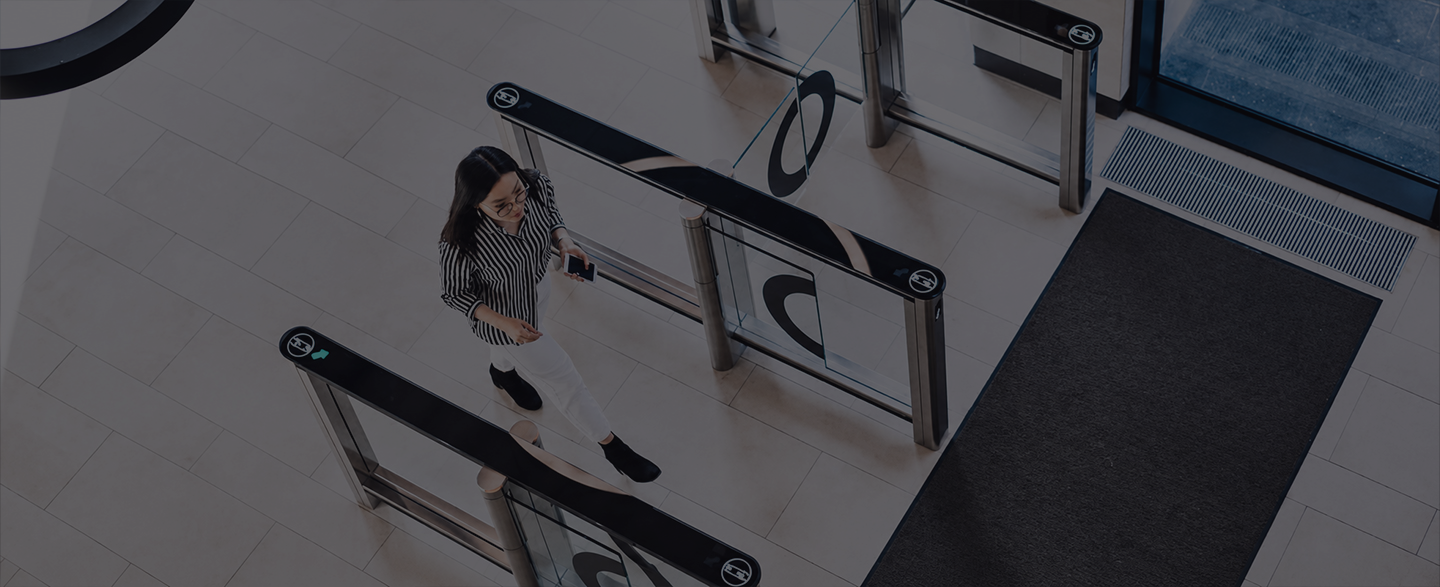
For decades, physical keys and plastic RFID fobs have been the backbone of commercial security. However, in a modern fast-paced business environment, these legacy systems represent a significant logistical burden and a glaring security vulnerability. Physical keys are easily duplicated, and fobs are frequently lost, stolen, or shared among employees. These issues don’t just compromise security; they create a constant administrative drain on HR and facility departments.
When an employee leaves a company, the failure to retrieve a physical credential creates an immediate security gap. In traditional systems, the only way to truly “close” that gap is through expensive hardware rekeying or manually reprogramming the local database. The transition to Mobile Access Control solves these challenges at the source. By turning the smartphone, a device nearly every professional already carries, into a secure, encrypted digital credential.
How Mobile Credentialing Works
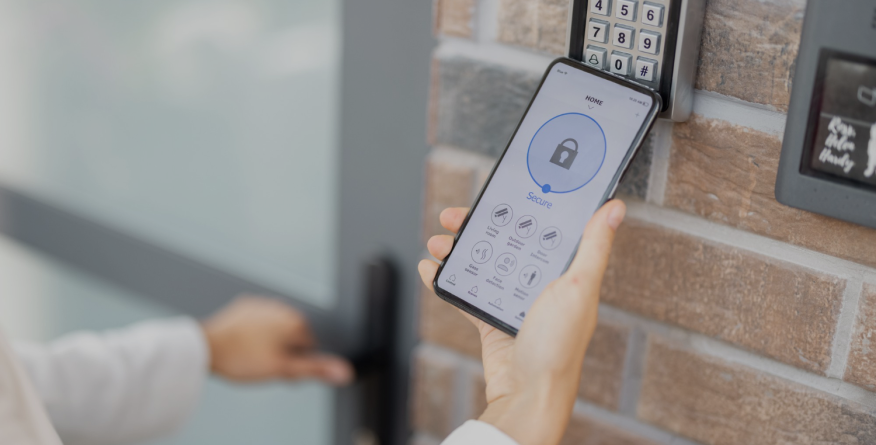
Mobile access is more than just a digital version of a plastic card; it is a high-tech handshake between your device and your building’s infrastructure. Most modern mobile systems utilize a combination of Bluetooth Low Energy (BLE) and Near Field Communication (NFC) to communicate with door readers. This dual-technology approach ensures that whether an employee uses an iOS or Android device, their entry is seamless and reliable.
The process is designed for maximum user convenience and high-throughput environments:
- Wave-to-Unlock and Proximity Sensing: Through “intent-based” sensing, users no longer need to fumble for a badge. They can simply wave their hand in front of a reader while their phone remains in their pocket or bag. The reader detects the authorized device nearby and grants access instantly.
- Biometric Verification and Multi-Factor Security: One of the greatest flaws of a plastic badge is that anyone holding it is the authorized user. Mobile credentials change this by leveraging the phone’s native security. Most systems can be configured to require FaceID, TouchID, or a PIN to activate the “key,” providing a layer of Multi-Factor Authentication (MFA) that is impossible to achieve with traditional fobs.
- Remote Issuance and Digital Onboarding: Administrators can “air-drop” or email a digital key to a new hire, guest, or contractor instantly. This allows for a completely remote onboarding process, where a user has access to the building before they even arrive for their first day, all without the need for a face-to-face meeting to hand over a physical card.
Centralized Cloud Management
While the user experience happens at the door, the true power of mobile access lies in the management software. For companies operating multi-building campuses or several locations across the USA, a cloud-based access control system allows for total global oversight from a single dashboard, whether you’re at our San Diego headquarters or on the road.
Instant Revocation and Real-Time Control
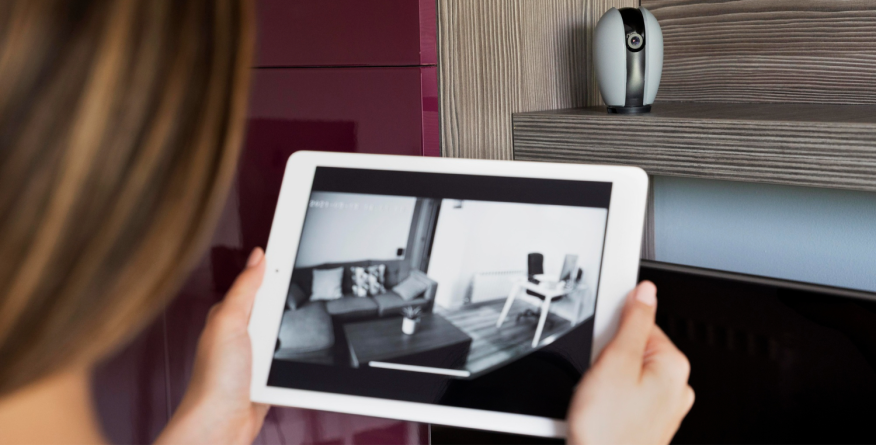
In a traditional system, revoking access often requires being physically present at a specific computer terminal. With a cloud-native platform, if a security breach occurs or an employee is terminated, their access can be revoked globally with a single click from any web browser. This ensures that a disgruntled former employee or a lost device never becomes a threat to your facility’s integrity.
Detailed Audit Trails and Compliance
In regulated industries like healthcare, finance, and defense contracting, knowing exactly who was where and when is a legal requirement. Mobile systems provide granular, timestamped logs that show entry events across every door in the network. These digital footprints are essential for internal audits and incident investigations, providing an objective record that is much harder to manipulate than manual sign-in sheets.
Integration with Video Surveillance
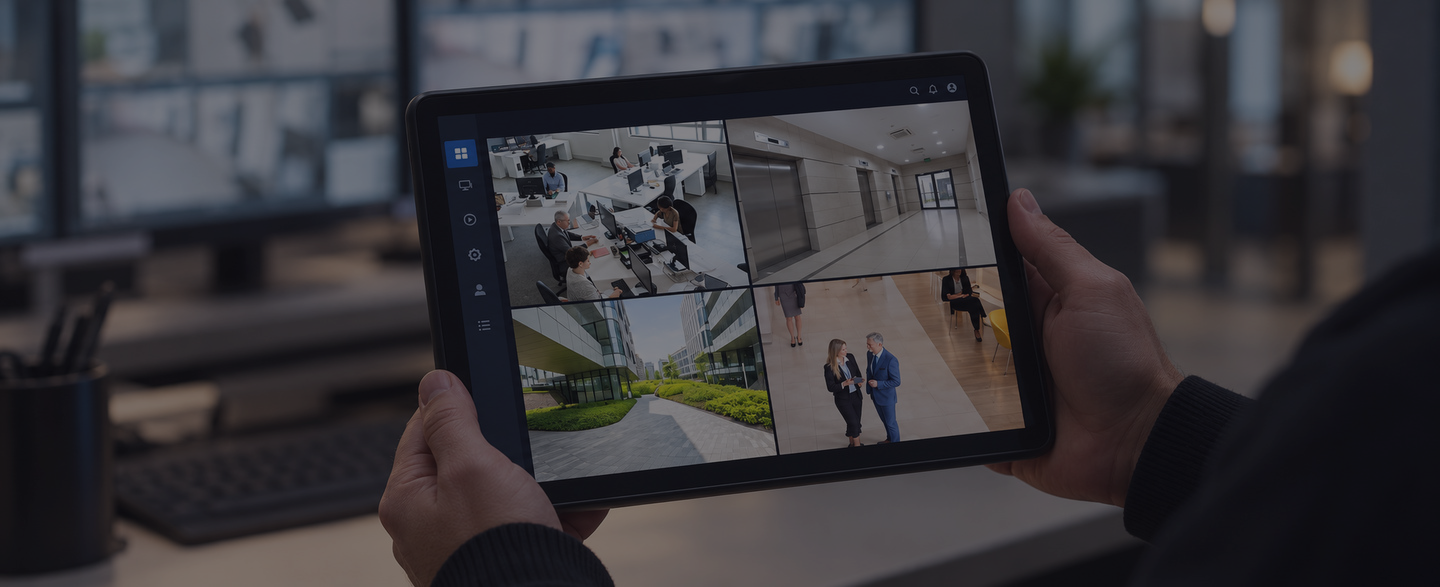
Modern access control does not live in a vacuum. When integrated with a CCTV system, every access event can trigger a corresponding video bookmark. If a “Door Forced Open” or “Tailgating” event is detected, the system can automatically pull up the live feed and record a high-definition clip. This allows security teams to visually verify the person using the mobile credential, ensuring that the person entering matches the digital ID on file.
Final Thoughts on Seamless Security
The modern workplace is defined by fluidity: employees moving between regional offices, remote workers visiting for a day, and third-party vendors requiring temporary access to specific zones. Traditional, static key management simply cannot keep up with this pace without creating significant friction and security risks.
Mobile access control offers a solution that is as flexible as the modern workforce while significantly tightening the security perimeter. At ESS, we believe that security should never be a barrier to productivity. By moving to a mobile-first infrastructure, you are investing in a system that respects the user’s experience as much as it protects your physical and intellectual assets. This is not just an upgrade to your hardware; it is a fundamental shift toward a smarter, more responsive, and more secure facility management strategy.
Conclusion
For businesses looking to scale, the move to mobile access is the most effective way to future-proof their physical security. It eliminates the recurring costs of plastic cards, reduces the administrative burden on staff, and provides a level of encryption and authentication that legacy systems can’t touch. As you look to upgrade your facility, remember that the most secure key is the one your employees already have in their hands. Contact Electro Specialty Systems today to discuss how we can transition your San Diego or national office into a mobile-first secure environment.