The Evolution of Corporate Security Infrastructure
Modern corporate campuses face a complex security landscape that extends far beyond traditional locks and guards. Today’s commercial environments, spanning multi-building complexes, mixed-use developments, and hybrid workspaces that require integrated approaches that balance stringent protection with seamless daily operations. As threats evolve and workforce dynamics shift, organizations increasingly turn to sophisticated access control systems and CCTV installation to create intelligent, responsive security ecosystems.
The challenge isn’t simply installing cameras or card readers. It’s designing cohesive infrastructure that protects sensitive assets, manages diverse populations of employees and visitors, and provides actionable intelligence all without creating friction for legitimate users. For facilities managers and security directors, this means evaluating technologies that can scale with organizational growth while integrating with existing building management systems.
Understanding Modern Access Control Systems
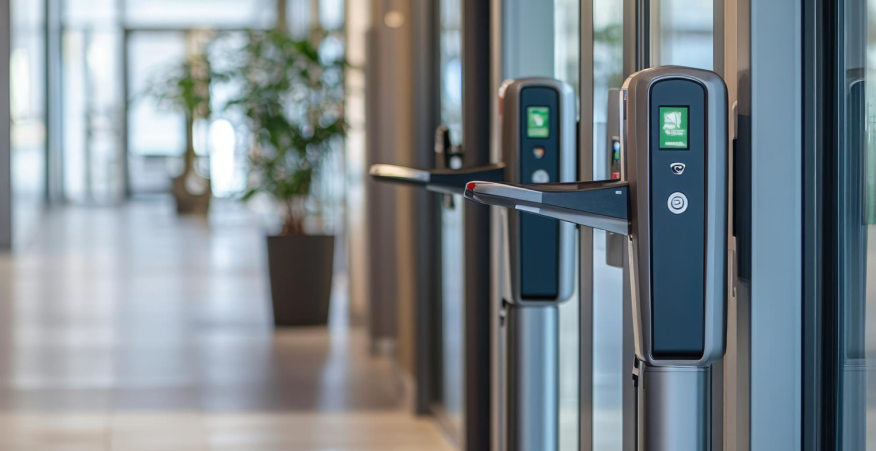
Access control has transformed from mechanical key management to sophisticated digital ecosystems that govern who enters specific areas, when, and under what conditions. For corporate campuses, these systems serve as the foundation of physical security strategy.
Credential Management
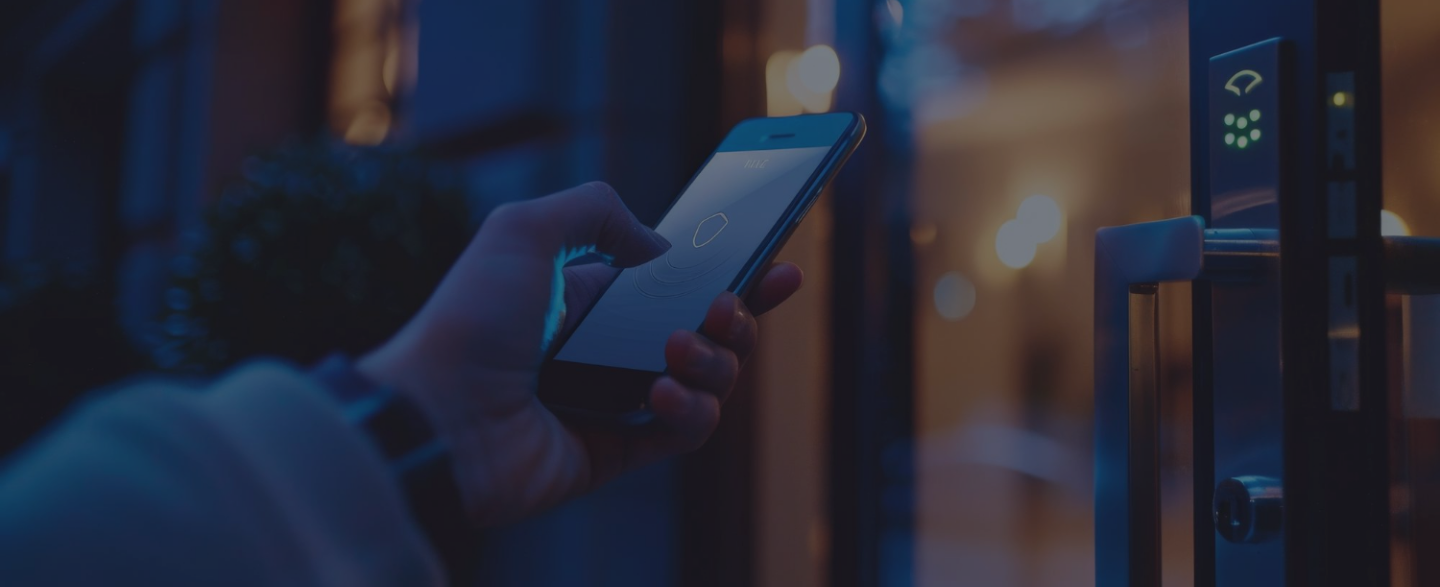
Modern systems support multiple authentication methods: proximity cards, mobile credentials, biometrics, and PIN codes. The best installations offer flexibility, allowing organizations to implement different security levels for different zones, standard card access for general office areas, multi-factor authentication for data centers or executive floors.
Centralized Administration
Multi-building campuses benefit enormously from unified management platforms. Rather than maintaining separate systems for each facility, centralized access control allows security teams to:
- Grant or revoke credentials instantly across all locations
- Monitor entry logs in real-time from a single dashboard
- Implement time-based restrictions (business hours vs. after-hours access)
- Generate compliance reports for audits and incident investigations
Strategic CCTV Installation for Commercial Environments
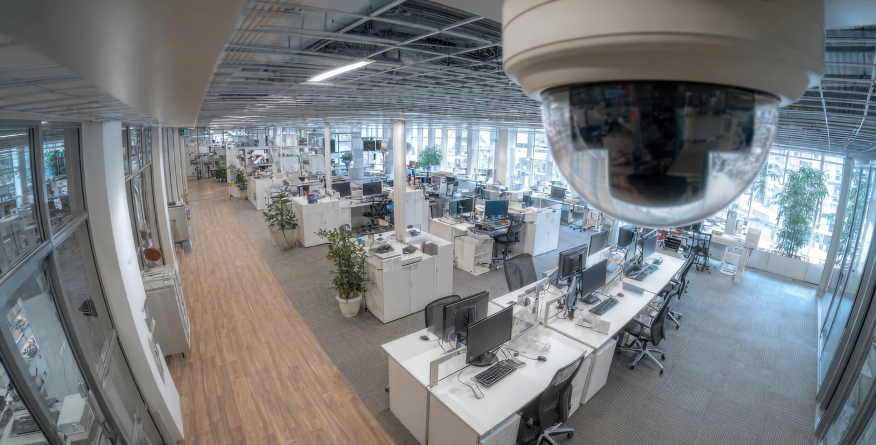
Video surveillance serves dual purposes in corporate settings: real-time situational awareness and forensic documentation. However, effective CCTV installation requires more than mounting cameras at entrances. It demands strategic planning that addresses coverage gaps, lighting conditions, storage requirements, and integration with broader security operations.
Perimeter and Exterior Monitoring
Corporate campuses require layered exterior protection. Parking structures, loading docks, and building perimeters need cameras capable of capturing clear footage in varying light conditions. Modern installations increasingly employ cameras with wide dynamic range (WDR) and infrared (IR) capabilities to ensure visibility during dawn, dusk, and nighttime hours.
High-Security Zones
Server rooms, R&D facilities, and financial operations demand specialized surveillance. These installations often feature:
- Cameras with analytics capabilities (motion detection, object recognition)
- Integration with access control systems to correlate video with entry events
- Higher resolution requirements (4K or greater) for detailed forensic review
- Redundant recording and backup systems to prevent evidence loss
Key Benefits for Corporate and Commercial Campuses
Organizations implementing modern access control and CCTV installations realize tangible operational advantages beyond basic security:
1. Operational Continuity
Reliable security infrastructure ensures business operations proceed without disruption. Employees move efficiently through appropriate spaces, visitors follow managed pathways, and after-hours protection maintains facility integrity, all without requiring constant manual oversight.
2. Risk Mitigation and Liability Protection
Documented access logs and video evidence protect organizations from false claims, workplace incidents, and regulatory scrutiny. When disputes arise, timestamped records provide objective documentation that supports resolution and demonstrates duty of care.
3. Scalability for Growth
Well-designed systems accommodate organizational expansion. Whether adding new buildings, increasing camera counts, or integrating additional credential types, modern platforms scale without requiring complete infrastructure replacement.
4. Data-Driven Security Optimization
Integrated systems generate valuable analytics: traffic patterns, peak access times, unusual activity trends. Security directors use this intelligence to optimize staffing, adjust access policies, and identify potential vulnerabilities before they become incidents.
Conclusion
For corporate and commercial campuses, access control systems and CCTV installation represent foundational investments in organizational security and operational efficiency. When properly designed and integrated, these technologies create intelligent environments where protection enhances rather than impedes daily business.