Local and state agencies don’t manage a single facility but they manage a jurisdiction. City halls, detention facilities, public works yards, courthouses, and parks all sit under one security mandate, yet each demands a different level of control, a different visitor profile, and a different consequence for failure. Add in the realities of public procurement, audit requirements, and constant public scrutiny, and the task facing government security leaders looks nothing like securing a private office park.
Closing that gap requires more than scattering cameras across city property. It requires infrastructure engineered to operate at jurisdiction scale, with every system feeding into a single, accountable framework.
The Core Security Benefits of Facial Recognition
At its foundation, facial recognition is a security-first technology. It eliminates many of the vulnerabilities inherent to human error and legacy security systems.
The process is designed for maximum user convenience and high-throughput environments:
- Dispersed, High-Stakes Assets: A single agency may be responsible for dozens of disconnected sites & streets, public buildings, utility yards, and secure facilities. Each requires consistent coverage.
- Mixed-Risk Environments: The same agency that manages an open public park may also operate a detention facility down the street, where the margin for error is effectively zero.
- Real-Time Law Enforcement Needs: Investigative and patrol teams need fast, accurate vehicle and incident data, not only the footage that has to be manually pulled and reviewed after the fact.
- Procurement and Compliance Pressure: Every system installed has to be documented, defensible, and built to withstand public records requests and compliance review.
The Integrated Framework: From Isolated Systems to a Unified Network
Solving these challenges means moving away from a patchwork of standalone systems—one vendor for cameras, another for access control, a third for alarms—toward a single, integrated security platform managed from a centralized point of control.

1. City-Wide Video Surveillance
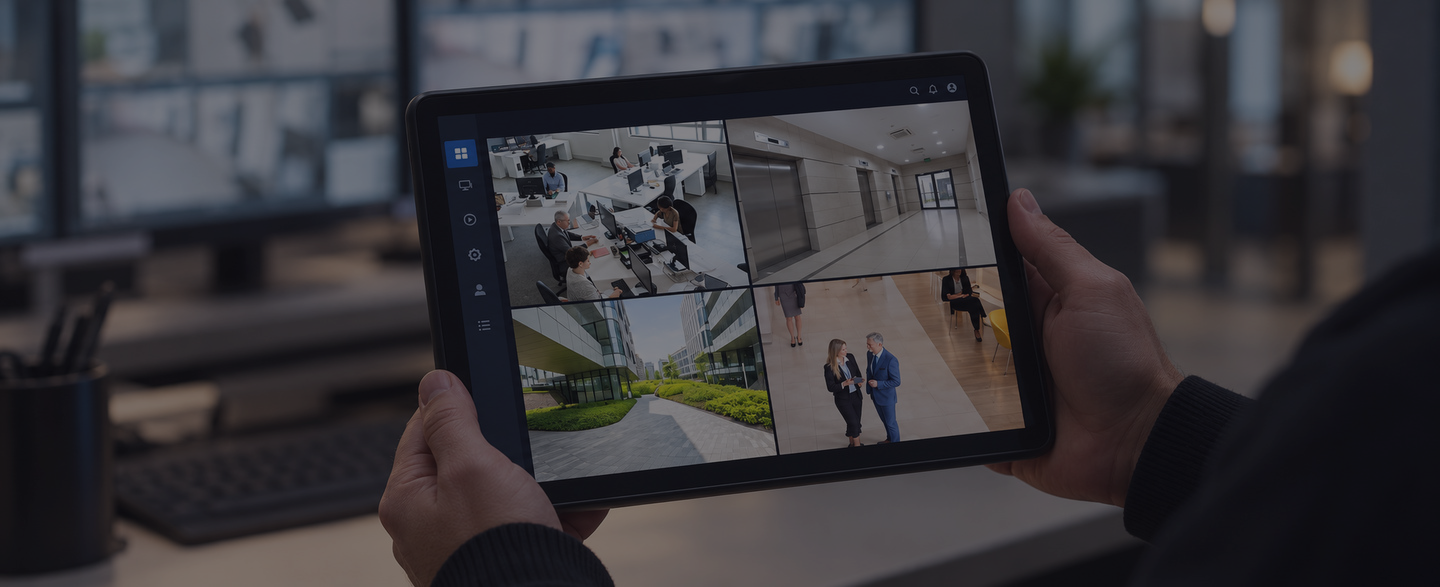
Government camera networks have to cover ground most private deployments never touch: open streets, transit corridors, parking structures, and public buildings, often spread across an entire city or county. High-resolution IP cameras paired with video analytics allow a small team to monitor a large footprint, automatically flagging activity in restricted zones or after-hours movement around government buildings without requiring constant human review of every feed.
2. License Plate Recognition for Law Enforcement Support
LPR has become one of the most valuable tools available to public agencies. Properly integrated LPR systems capture and cross-reference vehicle data in real time, giving law enforcement and investigative teams immediate access to actionable information without waiting on manual footage review or relying on a single camera angle to catch a critical detail.
3. Hardened Access Control for Detention & Restricted Facilities
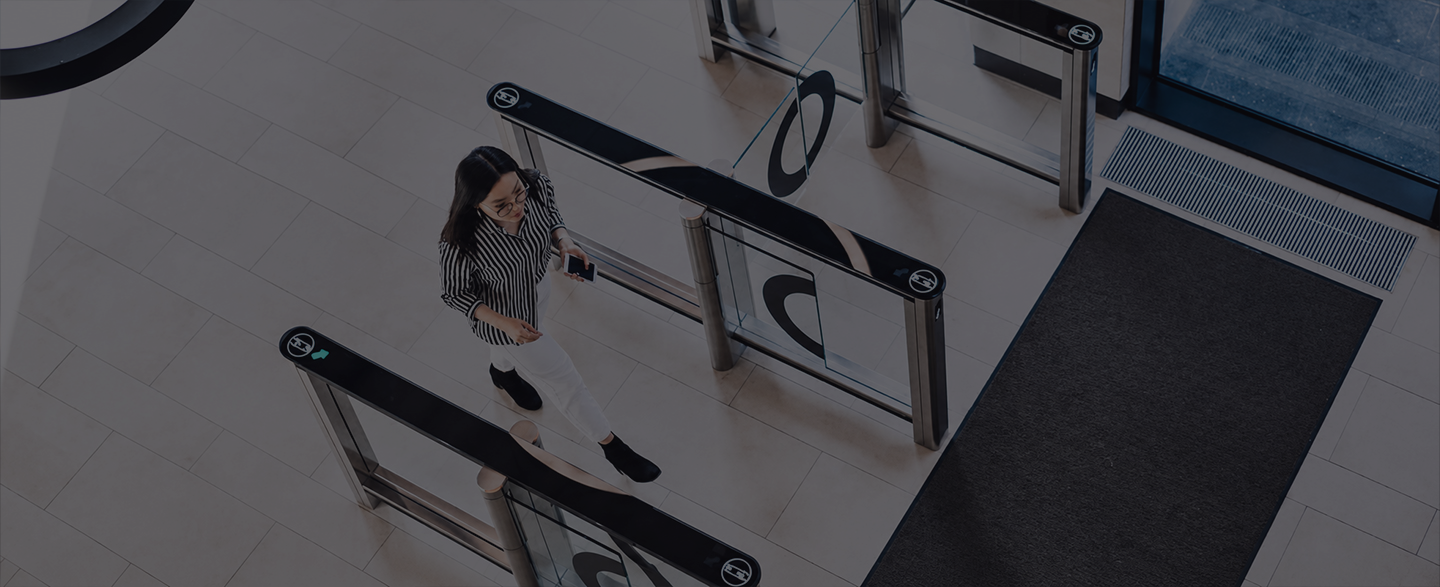
Detention facilities and other secure government sites operate under a different standard than a typical office building. Access control here isn’t just about convenience; it is about absolute reliability. Credential-based systems with redundant fail-safes, detailed audit logs, and tiered access levels ensure that only authorized personnel move through restricted areas, with a documented record of every entry and exit.
4. Centralized Monitoring Across Every Site
A jurisdiction-wide security posture only works if it’s actually unified. Centralized monitoring brings camera feeds, access events, and alarm activity from every site—courthouse, public works yard, detention facility—into a single operations view, so incidents get identified and routed to the right response team in seconds, not hours.
The Foundation: Infrastructure Built for Public Sector Reliability
None of these systems matter without a reliable network behind them. Government deployments often span large distances and harsh outdoor conditions, which means the cabling and network infrastructure connecting cameras, access points, and sensors has to be built for durability and uptime, not just initial installation. A system that fails during an actual incident isn’t just a technical problem but a public accountability problem.
Engineering Public Trust with Electro Specialty Systems
Securing a public agency isn’t about buying more hardware. It’s about designing a system that holds up under public scrutiny, performs reliably at scale, and supports the people responsible for protecting it.
As a California-based security integrator, ESS works directly with state and local agencies to design and deploy access control, video surveillance, LPR, and monitoring systems built around the realities of public sector operations, from procurement to long-term maintenance. Backed by factory-trained technicians and 24/7/365 support, we help government agencies protect their facilities, their personnel, and the communities they serve.