Enhancing Indoor Safety and Awareness with Halo Sensor Technology
Maintaining safe and responsive indoor environments has become a growing priority across commercial, healthcare, and institutional facilities. While traditional security systems focus on visual monitoring and access control, emerging sensor technologies are expanding how environments are monitored. Halo Sensor is one such solution, designed to provide real-time environmental and behavioral awareness indoors.
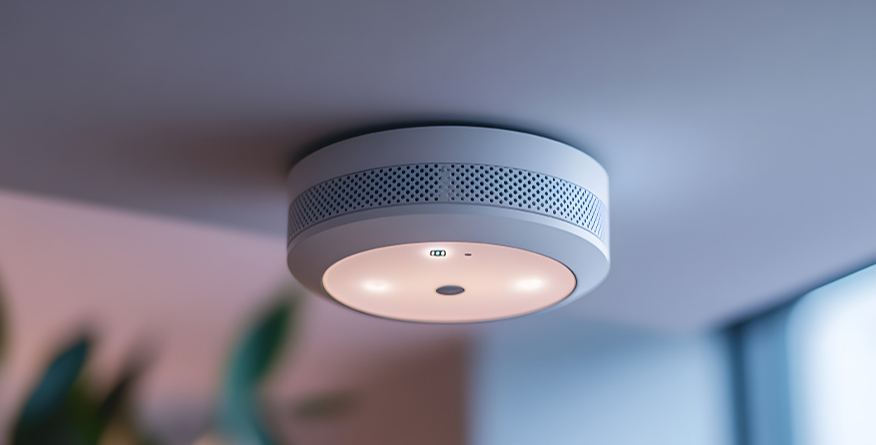
What Is a Halo Sensor and How Does It Work?
Halo Sensor is an intelligent, non-camera sensor that monitors indoor environments by detecting changes in air quality, sound patterns, and environmental conditions. Unlike video-based systems, Halo Sensor focuses on privacy-conscious monitoring while still delivering actionable insights related to safety, health, and potential incidents.
By analyzing multiple data points simultaneously, Halo Sensor supports early awareness of events that may otherwise go unnoticed.
The Need for Advanced Indoor Monitoring
Indoor spaces often face challenges that traditional security tools alone cannot fully address, such as:
- Activities occurring outside camera coverage
- Privacy concerns in sensitive environments
- Environmental factors affecting occupant safety
- Delayed awareness of developing incidents
Facilities such as healthcare centers, schools, and commercial buildings require monitoring solutions that balance situational awareness with occupant privacy.
How Halo Sensor Supports Modern Security Systems
Halo Sensor enhances existing security infrastructure by adding environmental and acoustic intelligence. When integrated with broader systems, it can:
- Detect abnormal sound patterns indicating distress or disruption.
- Monitor air quality indicators relevant to health and safety.
- Provide alerts without relying on video recording.
- Support faster response through real-time notifications.
This approach allows security and facility teams to make informed decisions using non-visual data sources.
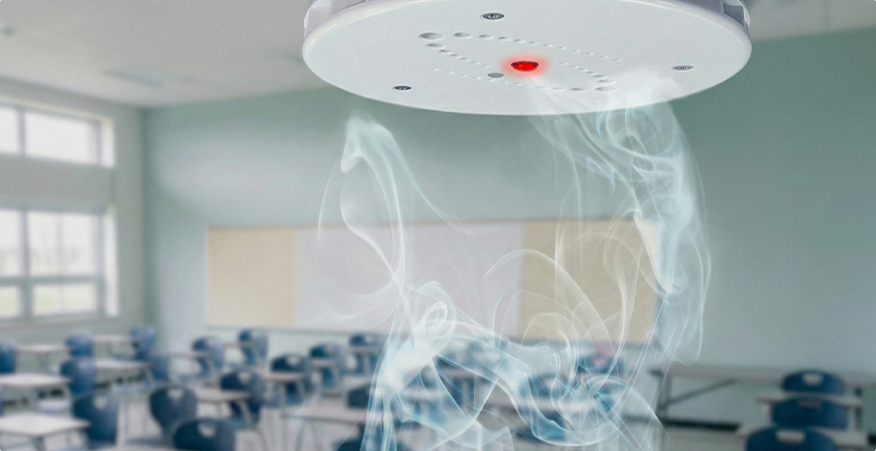
Integration Within a Broader Security Framework
Effective Halo Sensor deployments depend on thoughtful system design and integration. Important considerations include:
- Placement in high-risk or high-traffic indoor areas.
- Integration with access control and monitoring platforms.
- Alert configuration to ensure relevance and accuracy.
- Alignment with facility policies and operational workflows.
Electro Specialty Systems (ESS) integrates Halo Sensor technology into unified security ecosystems, ensuring it complements other systems rather than operating in isolation.
Use Cases Across Different Environments
Halo Sensor technology is well-suited for indoor environments where privacy and safety are both critical, including:
- Healthcare and medical facilities
- Educational institutions
- Corporate offices and shared workspaces
- Residential and multi-tenant buildings
In these settings, environmental and acoustic monitoring enhances awareness while maintaining privacy standards.
Exploring Integrated Sensor-Based Security Solutions
Organizations evaluating indoor monitoring technologies should consider how non-camera sensors fit within their broader security and facility management goals. System integration, configuration, and long-term support play a critical role in maximizing value.
Learn more about how integrated security systems combine environmental sensing, monitoring, and system design to support modern facilities.