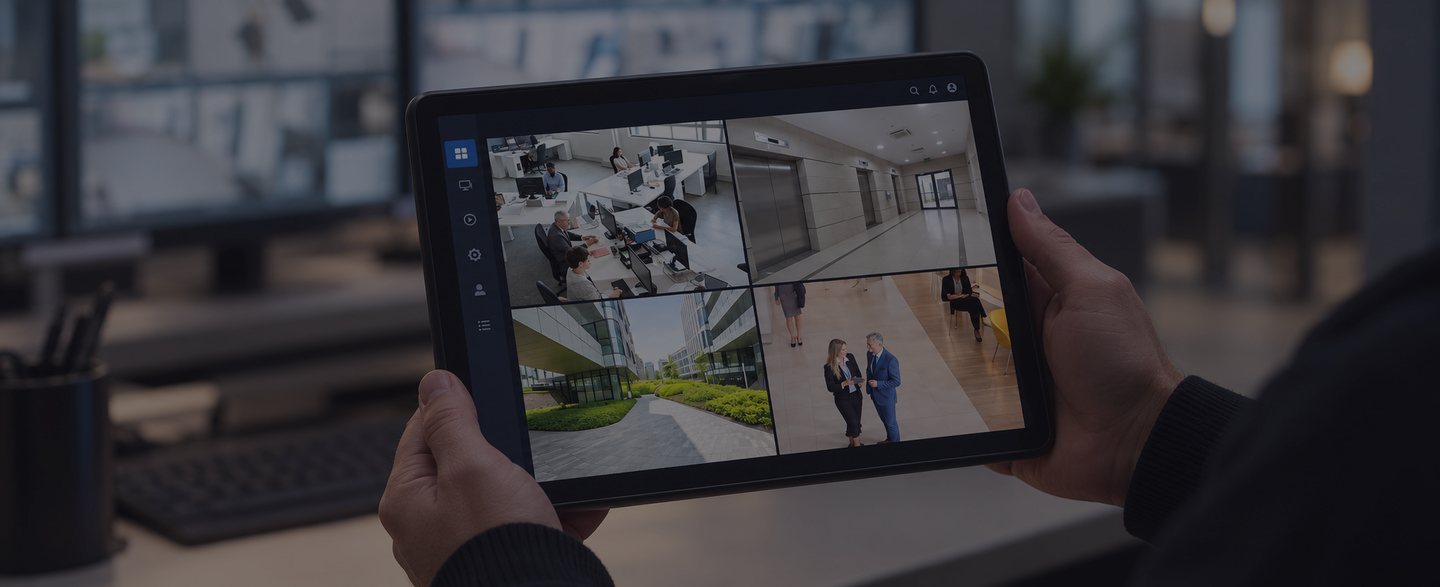
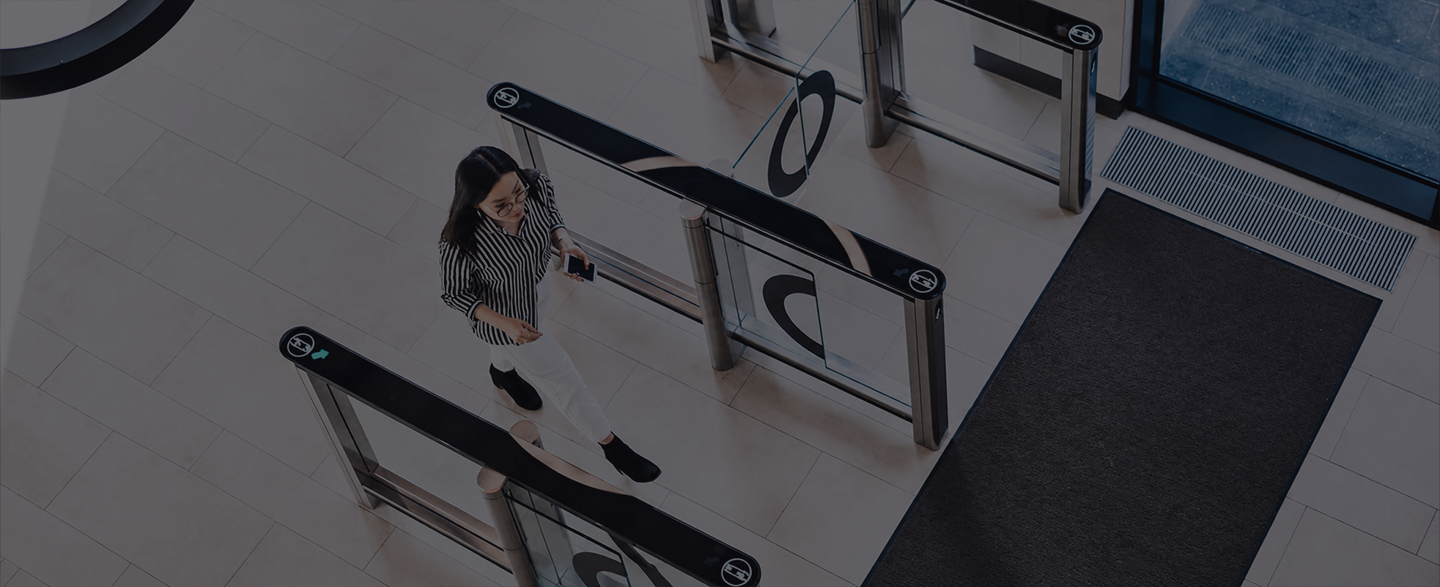
Physical security has traditionally depended on cameras, access control, alarms, and security personnel to protect people, property, and facilities. These systems remain essential, but the amount of information they generate has grown dramatically. A large facility can have dozens or even hundreds of cameras recording continuously, creating far more video than a security team can realistically watch or review manually.
Artificial intelligence is changing how organizations deal with that information. Instead of using cameras primarily to record what has already happened, AI can help identify people and vehicles, recognize unusual activity, search recorded footage, and bring important events to an operator’s attention. Industry research now identifies AI as one of the major forces changing physical security, particularly as analytics become available through cameras, servers, cloud platforms, and hybrid environments.
The result is a shift from simply collecting security footage to using that footage as actionable information. For facility owners, that can mean faster investigations, more focused monitoring, fewer unnecessary alerts, and better use of the security staff already on site.
From Recording Video to Understanding It
A conventional security camera records activity. If something goes wrong, someone generally has to go back through that recording and find the relevant footage. This process can take minutes for a simple incident or hours when multiple cameras and locations are involved.
AI adds an analytical layer to the camera system. Instead of treating every frame of video equally, AI powered analytics can identify objects, classify activity, and recognize events that match rules or patterns defined by the organization. The Security Industry Association describes this as one of the major practical applications of AI in security, helping organizations analyze large amounts of information and direct operators toward events that require attention.
This changes the role of surveillance cameras. They are no longer just devices that create evidence after an incident. They can become intelligent sensors that help security teams understand what is happening while an event is taking place.
Why Traditional Surveillance Struggles at Scale
The biggest challenge for many facilities is not a lack of cameras. It is the sheer amount of information those cameras produce.
Imagine a property with 100 cameras operating around the clock. Even if each camera produces useful footage, expecting a security operator to continuously watch every feed is unrealistic. Human attention is limited, and operators can become overwhelmed when every movement, alarm, and event requires consideration.
AI can help by filtering that information before it reaches the operator. Instead of presenting hundreds of simultaneous video feeds and alerts, intelligent systems can identify people, vehicles, unusual movements, or other defined events and prioritize them for review. This allows security personnel to spend less time monitoring routine activity and more time investigating events that may require action.
That does not mean fewer cameras are necessary. It means organizations can get more value from the cameras they already have by making the information they collect easier to understand and search.
Detecting Threats Before They Escalate
One of the most important developments in intelligent security is the move from reactive investigation toward earlier detection.
Traditional motion detection can tell a security system that something moved. More advanced AI analytics can add context by identifying whether the movement involves a person or vehicle and whether the activity is unusual for that location. Avigilon’s current platform includes Unusual Activity Detection and Unusual Motion Detection, which can identify activity or movement that differs from what is normally expected in a scene.
Consider a warehouse that is normally empty overnight. A person moving through a restricted area at two in the morning is very different from employees moving through the same area during a normal shift. AI can use the context of the scene to help identify unusual activity and bring it to the attention of security personnel.
This does not mean AI automatically knows that a crime is taking place. Instead, it helps identify situations that deserve human attention earlier than conventional surveillance may allow.
Finding the Right Moment in Hours of Footage
After an incident, one of the most useful capabilities AI provides is faster video search.
Suppose a facility manager knows that a person wearing a dark jacket entered through one entrance and later left the property. With conventional surveillance, an operator may need to manually review several camera feeds and timestamps to reconstruct what happened.
AI powered search can significantly reduce that effort. Avigilon Appearance Search, for example, is designed to locate a person or vehicle of interest across recorded video and can search across multiple cameras and locations using available descriptive information.
This can transform an investigation. Rather than starting with hours of footage, a security team can start with the characteristics of the person or vehicle they are looking for and allow the system to narrow the search.
The benefit is not simply convenience. Faster video investigation can help organizations establish timelines, identify additional evidence, and provide relevant information to security teams or law enforcement sooner.
Recognizing People, Vehicles, and Unusual Activity
AI can also help cameras understand what they are seeing.
Modern video analytics can distinguish between people and vehicles and apply rules to specific types of activity. Depending on the platform and configuration, systems can support capabilities such as object classification, crowd analytics, appearance search, license plate recognition, audio analytics, and unusual activity detection.
This is especially useful when a facility needs more than basic motion detection. A security team may want an alert when a vehicle enters a restricted zone, when a person crosses a defined boundary, or when activity occurs in an area where it normally should not.
The advantage is context. Instead of simply reporting that something moved, the system can provide more information about what moved and why the event may matter.
Bringing Cameras and Access Control Together
Physical security rarely depends on cameras alone. A modern facility may use video surveillance, access control, alarms, intercoms, and other sensors at the same time.
AI becomes even more useful when these systems can work together.
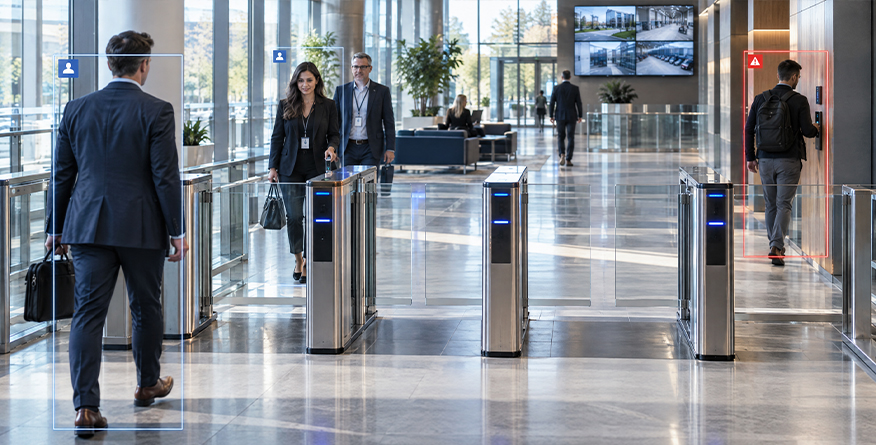
For example, an access control system may show that a specific credential was used to enter a building. Video can then provide visual context around that access event. Avigilon’s platform brings video security and access control together, while its identity and appearance search capabilities can help operators connect access events with relevant video.
This matters because many security incidents involve multiple systems. A badge event, door opening, camera detection, and alarm may all be pieces of the same situation. Integrating those signals can give security personnel a clearer picture without requiring them to move between several disconnected systems.
Managing Security Across Multiple Locations
The value of AI becomes even more apparent when a company operates multiple facilities.
A business may have offices, warehouses, manufacturing plants, retail locations, or other properties spread across different areas. Managing each location independently can make investigations and monitoring more difficult, particularly when security teams need to find the same person or vehicle across several sites.
Modern security platforms increasingly support centralized management and analytics across locations. Avigilon promotes centralized video security and access control across sites, while its Appearance Search technology can help locate people or vehicles across multiple locations under supported configurations.
This can be particularly valuable for organizations with distributed security operations. A security team can investigate an event at one location and then determine whether related activity occurred elsewhere without manually starting the search from the beginning at every facility.
Faster Response, Better Decisions
AI’s value is not limited to detection. It can also shorten the time between an event occurring and a security team understanding what happened.
The Security Industry Association notes that AI is increasingly being used to filter alarms, identify anomalies, and help operators prioritize important events. More advanced systems are also moving toward natural language searches and automated workflows that can connect multiple security events and help operators determine what to investigate next.
For a security team, this can mean less time spent searching through irrelevant information and more time spent responding to situations that require judgment. The technology is effectively helping operators answer three questions faster: What happened? Where did it happen? What should we investigate next?
The goal is not to remove people from security operations. It is to give them better information at the moment they need it.
Turning Video Into Business Intelligence
AI powered cameras can also provide value outside traditional security operations.
The same video infrastructure used to protect a facility can potentially provide information about occupancy, vehicle activity, traffic patterns, and other operational conditions. Industry guidance on AI use cases recognizes applications that extend beyond security into areas such as business operations and efficiency.
For example, a retail business could use video analytics to understand customer movement, while a logistics facility could use cameras to analyze activity around loading areas. Security and operations can therefore benefit from the same underlying infrastructure.
This is changing how organizations think about surveillance investments. The system may no longer be valuable solely because it records an incident. It can also generate information that helps an organization understand how its facilities are being used.
The Role of People in an AI Powered Security System
Despite the rapid development of AI, people remain an important part of physical security.
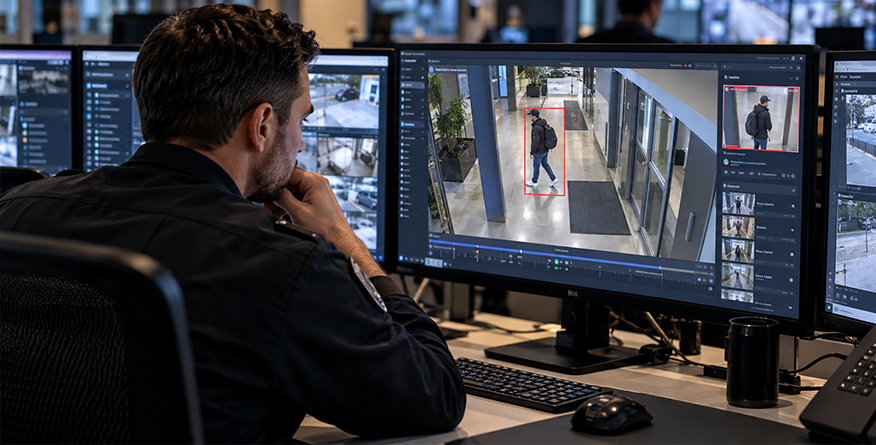
An AI generated alert does not automatically prove that a security incident has occurred. An unusual movement may have a legitimate explanation, and a system identifying a person or vehicle still requires context and, in many situations, human verification.
The most effective approach is therefore not replacing security personnel with AI. It is using AI to support them. The technology can handle large scale analysis and repetitive searches while security personnel remain responsible for verification, judgment, escalation, and response.
This combination allows organizations to use AI where it provides the greatest value without removing human oversight from situations where context and judgment are important.
Privacy, Cybersecurity, and Responsible AI
More intelligent security systems also create more important questions around privacy and cybersecurity.
AI may process video, vehicle information, access records, and other data that organizations need to protect. Facility owners should understand what information is being collected, where it is processed, how long it is retained, who can access it, and what controls are in place to prevent inappropriate use.
The technology’s architecture matters as well. AI analytics can run directly on cameras, on local servers, in cloud environments, or through hybrid configurations. Each approach has different implications for infrastructure, privacy, network requirements, and IT management.
Organizations should therefore evaluate AI based not only on what a system can detect, but also on how the organization will manage and protect the information that the system produces.
What to Look for in an Intelligent Security System
The best place to start is not with an AI feature list. Start with the facility’s actual security challenges.
Consider where incidents occur, how much footage security personnel currently have to review, which areas are difficult to monitor, and what information is needed when something goes wrong. From there, organizations can determine which capabilities can provide meaningful value, whether that means appearance search, unusual activity detection, license plate recognition, access control integration, audio analytics, or centralized management across multiple locations.
Organizations should also look at how AI can fit into their existing infrastructure. Avigilon offers analytics through its cameras, video management platforms, and AI appliances, allowing organizations to add intelligent capabilities to their security environment based on their existing technology and operational requirements.
The most important question is simple: Will this AI capability make the security operation more effective? AI should reduce unnecessary work, improve visibility, and help teams respond more intelligently rather than simply adding another dashboard or generating more alerts.
Conclusion
AI is transforming physical security by changing what organizations can do with the information their security systems collect. Cameras can now help identify people and vehicles, detect unusual activity, search large amounts of recorded footage, recognize license plates, and connect video with access control events.
For facility owners, the opportunity is not simply to install smarter cameras. It is to build a security environment that can identify what matters, reduce the amount of information operators have to process manually, and provide better context when a security event occurs.
Organizations that benefit most from AI will be those that begin with clear security objectives and choose technology around those needs. With the right combination of cameras, analytics, access control, and human oversight, AI can help make physical security more informed, proactive, and responsive.
Electro Specialty Systems helps San Diego businesses evaluate and implement modern physical security solutions, including Avigilon systems with AI powered video analytics. Whether your priority is faster investigations, improved perimeter monitoring, intelligent access control, license plate recognition, or greater visibility across multiple facilities, the right technology can help your security team protect your people, property, and operations more effectively.