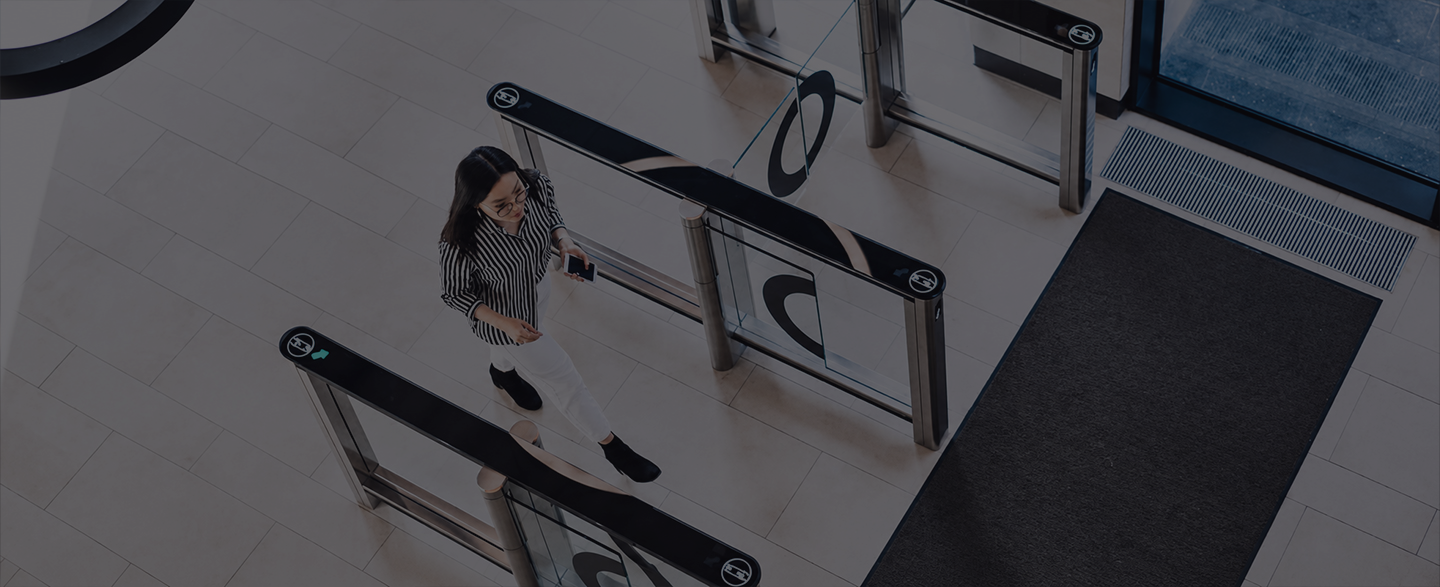
Hospitals and healthcare facilities operate differently from traditional commercial environments. They must remain accessible to patients, visitors, and medical professionals while protecting restricted areas where unauthorized access can impact patient safety, clinical operations, and valuable resources.
Healthcare access control systems help organizations manage movement throughout their facilities by ensuring that only authorized individuals can enter specific areas. From pharmacies and laboratories to server rooms and staff-only spaces, these systems provide greater control, visibility, and accountability without disrupting daily workflows.
Selecting the right access control solution requires more than choosing hardware. Healthcare organizations must consider facility layout, daily workflows, security priorities, and how different systems can work together to support long-term protection.
What Are Healthcare Access Control Systems?
Healthcare access control systems are security solutions that manage who can enter specific areas within a healthcare facility. Unlike traditional locks and keys, these systems allow organizations to control access based on an individual’s role and responsibilities, ensuring that only authorized personnel can enter restricted areas.
Electronic access control provides greater flexibility by allowing administrators to update or remove access permissions without replacing physical locks or issuing new keys. These systems also create records of access activity, helping security teams monitor entry events and investigate incidents when needed.
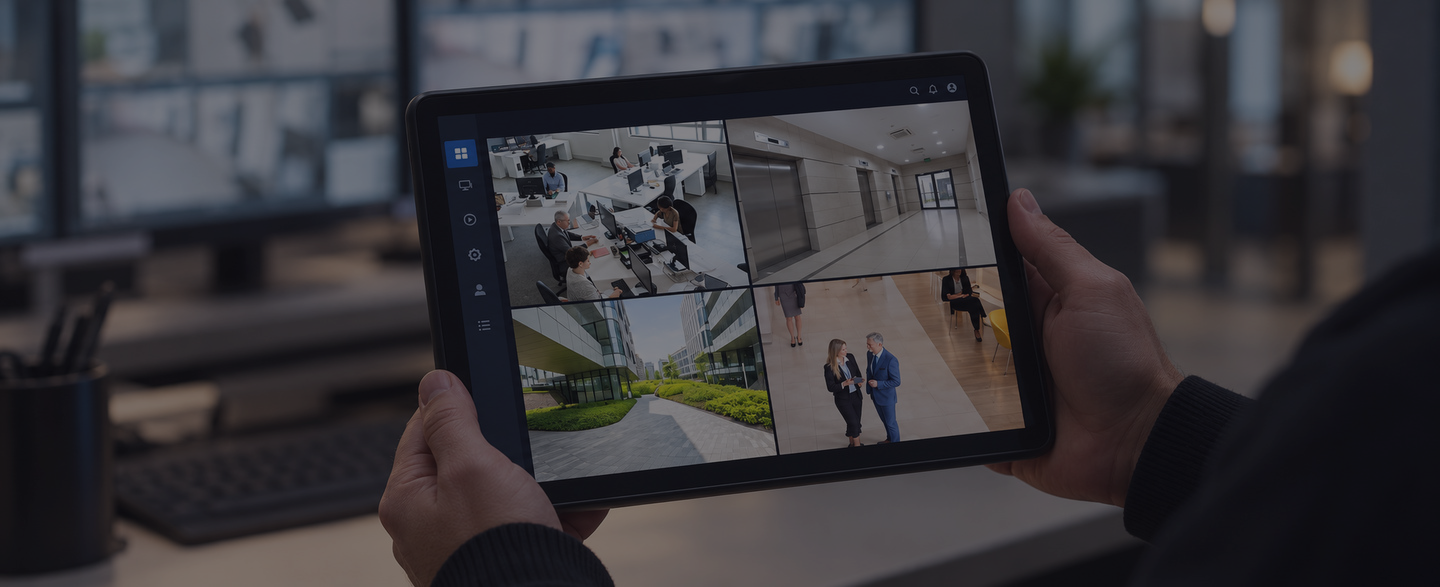
Modern access control systems can also integrate with other physical security solutions, including video surveillance, visitor management, and intrusion detection. When these systems are designed to work together, security teams gain better visibility into facility activity and can respond more effectively to access events or security concerns.
Understanding how these systems work provides the foundation for evaluating why they are essential in healthcare environments.
Why Healthcare Access Control Systems Are Essential?
Healthcare facilities face a unique security challenge: they must remain open and accessible while protecting patients, staff, critical resources, and restricted areas. With employees, visitors, contractors, and vendors moving throughout a facility every day, organizations need a reliable way to manage access without disrupting clinical operations.
Protect Patients and Staff
Access control helps healthcare organizations maintain safer environments by limiting entry to approved individuals. Restricting access to patient care areas, staff-only spaces, and other sensitive locations helps reduce unnecessary exposure and supports the safety of everyone inside the facility.
Secure Restricted Areas
Certain areas require a higher level of protection due to the equipment, medications, or information they contain. Pharmacies, laboratories, operating rooms, medication storage areas, and server rooms all require controlled access to ensure only appropriate personnel can enter these spaces.
Prevent Unauthorized Access
Managing physical keys becomes challenging as healthcare facilities deal with employee turnover, contractors, and temporary staff. Electronic access control allows administrators to quickly add, modify, or remove access permissions without replacing locks or distributing new keys, making access management more efficient.
Improve Accountability with Audit Logs
Access control systems create records of entry activity, showing who accessed secured areas and when. These audit logs help security teams investigate incidents, review activity, and verify that access policies are being followed. When connected with video surveillance, access events can also be matched with footage for additional visibility.
Support Regulatory Compliance
Access control supports healthcare organizations by helping enforce internal security policies and maintain accountability. By limiting access to restricted areas and keeping records of activity, these systems provide a structured approach to managing facility security requirements.
Types of Healthcare Access Control Systems
Healthcare facilities have different layouts, workflows, and security requirements, so access control solutions vary based on the areas being protected and how access needs to be managed. In many cases, the most effective approach is not selecting one technology for the entire facility, but designing a system that matches the security needs of each area.
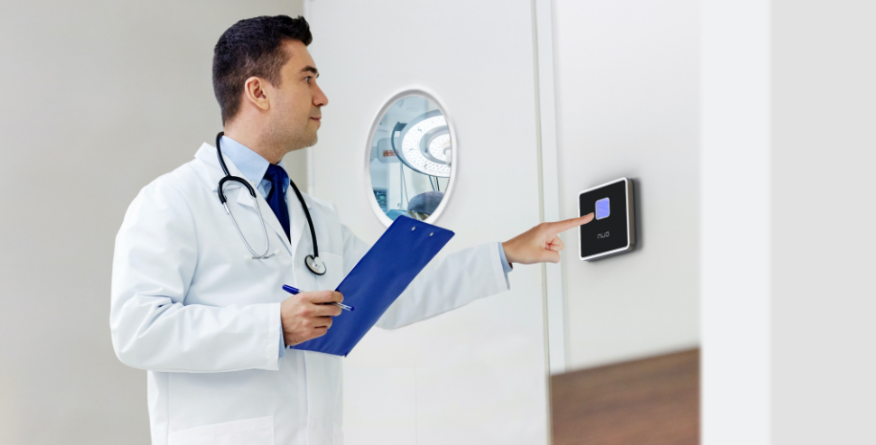
Key Card and Fob Systems
Key cards and proximity fobs are among the most widely used access control methods in healthcare facilities. Employees present their credential at a door reader, which verifies authorization before allowing entry.
These systems are commonly used for staff entrances, administrative offices, laboratories, and other restricted areas. While they are easy to issue and manage, lost or shared credentials should be deactivated quickly to prevent unauthorized use.
PIN and Keypad Access
PIN and keypad systems require users to enter a unique code to gain access. They are often used in smaller facilities or locations where physical credentials are not practical.
Because there are no cards to replace, keypad systems can simplify access management. However, codes must be updated regularly and managed carefully to prevent unauthorized sharing.
Mobile Credentials
Mobile credentials allow users to access secured areas using a smartphone instead of a physical badge. This can simplify credential management for healthcare organizations with multiple locations, temporary staff, or contractors who require limited access.
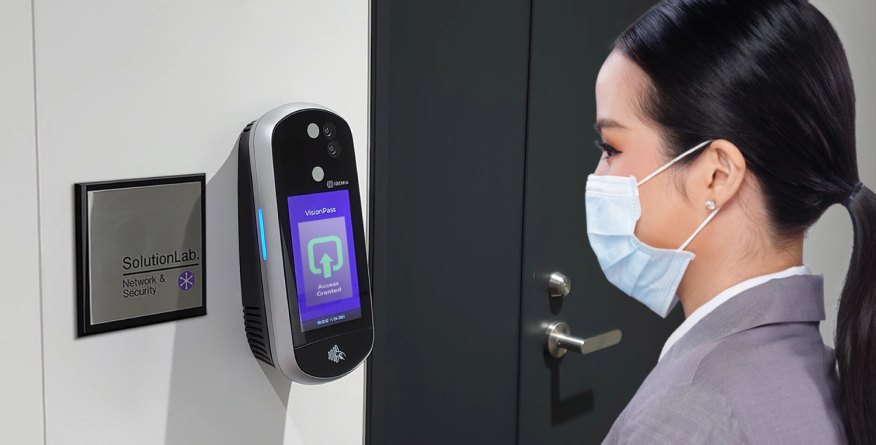
Biometric Access
Biometric systems use unique physical characteristics, such as fingerprints or facial recognition, to verify identity before granting access. These solutions are commonly used for higher-security areas such as pharmacies, medication storage rooms, laboratories, and server rooms.
Cloud-Based vs. On-Premise Systems
Healthcare organizations can choose between cloud-based and on-premise access control management. Cloud-based systems allow administrators to manage access remotely, making them useful for organizations with multiple locations. On-premise systems provide direct control over the infrastructure and may be preferred by facilities with specific management requirements.
Many healthcare facilities combine different access control methods rather than relying on a single solution. The right approach depends on the facility’s security needs, operational requirements, and the level of protection required for each area.
Best Practices for Implementing Healthcare Access Control
Selecting the right access control system is only the first step. Proper implementation, ongoing management, and clear procedures are essential to ensuring the system supports both facility security and daily healthcare operations.
Define Access Levels by Role
Access should be assigned based on an employee’s responsibilities rather than providing the same level of access to everyone. For example, pharmacists may require access to medication storage areas, while laboratory staff may only need access to testing facilities. Role-based permissions help limit unnecessary access while allowing staff to perform their duties efficiently.
Integrate with Video Surveillance
Connecting access control with video surveillance provides additional visibility into activity within restricted areas. Security teams can review footage alongside access events to verify who entered a location and better understand incidents. This is especially useful for sensitive areas such as pharmacies, operating rooms, and medication storage facilities.
Review Permissions Regularly
Employee roles and access requirements change over time. Regular reviews help ensure that former employees, transferred staff, or temporary users no longer have unnecessary access. Updating permissions regularly keeps the system aligned with current operational needs.
Maintain Emergency Override Procedures
Healthcare facilities need clear procedures for situations where immediate access is required. Emergency override processes allow authorized personnel to respond quickly during events such as medical emergencies or evacuations while maintaining proper accountability.
Monitor Access Activity
Access records provide valuable insight into how secured areas are being used. Reviewing activity logs helps facility managers investigate incidents, identify unusual access patterns, and confirm that security procedures are being followed.
Following these best practices helps healthcare organizations create an access control strategy that supports both security and operational efficiency.
How to Choose the Right Healthcare Access Control System?
Every healthcare facility has different operational and security requirements, so selecting the right access control system requires careful evaluation. The needs of a small clinic will differ from those of a multi-building hospital campus. Consider the following factors when evaluating a solution for your facility.
Consider Your Facility Size and Layout
Evaluate the number of buildings, entrances, users, and restricted areas that require protection. Larger facilities may need centralized management across multiple locations, while smaller facilities may require a simpler approach.
Plan for Future Growth
Choose a system that can adapt as your organization expands. A scalable solution should allow you to add users, doors, or new locations without requiring a complete replacement of your existing system.
Evaluate Integration Capabilities
Consider whether the system can integrate with other physical security solutions, including video surveillance, visitor management, and intrusion detection. Connected systems provide better visibility and help security teams respond more effectively to incidents.
Prioritize Ease of Management
Administrators should be able to easily manage users, update access permissions, issue temporary credentials, and review access activity. A simple management process reduces administrative effort and helps keep access information accurate.
Assess Vendor Support and Service
Look beyond the technology itself and evaluate the support provided by the vendor. Installation assistance, training, maintenance, and ongoing technical support can help ensure the system continues to perform effectively over time.
Choosing the right healthcare access control system requires balancing security needs, operational requirements, and future plans. A properly selected solution can provide reliable access management while supporting the evolving needs of your healthcare facility.
Conclusion
Healthcare access control systems help organizations manage facility access, protect restricted areas, and support safer day-to-day operations. By understanding the available solutions, following implementation best practices, and evaluating systems based on their specific requirements, healthcare organizations can make informed decisions that align with their security goals.
If you are upgrading an existing system or planning access control for a new healthcare facility, partnering with an experienced security integrator can help ensure the solution is designed around your facility’s requirements, workflows, and long-term goals. ESS helps organizations evaluate, design, and implement security solutions that support safer and more efficient operations.