Integrated Security Systems vs. Standalone Solutions: What’s Best for Your Campus?
When planning security infrastructure for a university, corporate campus, or government facility, one of the most critical decisions isn’t which cameras to buy or which access control brand to choose. Instead it’s whether your systems should operate independently or work together as an integrated platform.
This decision has long term implications for incident response speed, operational efficiency, staffing requirements, and total cost of ownership. Yet many facilities make this choice by default rather than by design, ending up with a fragmented security infrastructure that looks comprehensive on paper but fails to deliver coordinated protection when it matters most.
Let’s break down what integration actually means, when standalone systems make sense, and how to evaluate which approach serves your facility’s needs.
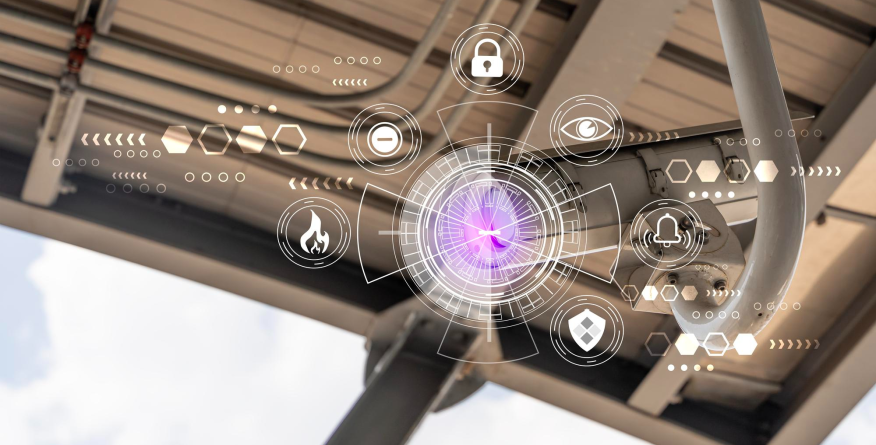
What Does “Integrated Security” Actually Mean?
Integration is one of the most misused terms in the security industry. A vendor might claim their system is “integrated” simply because it has an API or because you can view multiple systems from one computer. But true integration goes deeper.
Standalone Systems: Each security technology operates independently. Your access control runs on one platform. Video surveillance on another. Intrusion detection on a third. Mass notification on a fourth. Each system has its own interface, its own user management, and its own event logs.
Integrated Systems: Security technologies communicate and respond to each other automatically. When someone badges into a secure area, cameras at that door activate and display in real time. When an intrusion sensor triggers, cameras in that zone pull up automatically, doors lock, and alerts route to the all appropriate personnel without manual operator intervention.
The difference isn’t just convenience. It’s response time, situational awareness, and the ability to coordinate security actions across an entire facility from a single point of control.
The Case for Standalone Systems
Integrated systems aren’t always the right answer. Standalone solutions work well in certain situations:
Small Facilities with Simple Needs: A single-building office with basic security requirements may not need integration. If your primary goal is deterring break-ins and having footage for insurance claims, standalone cameras and a basic alarm system might suffice.
Budget Constraints: Integration requires compatible hardware, central management software, and often network infrastructure upgrades. If the budget is extremely limited, phasing in standalone systems and integrating later can be a pragmatic approach.
Low Security Risk Tolerance: Facilities with minimal security threats such as small retail spaces or low-risk warehouses may not justify the investment in integrated platforms.
Existing Legacy Infrastructure: If you have functional equipment from multiple vendors that can’t communicate with each other, forcing integration might require replacing everything. In some cases, operating standalone systems until a planned refresh makes more sense.
When Integration Becomes Essential
For larger, more complex facilities especially those with high occupancy, valuable assets, or regulatory requirements integrated systems stop being optional and become operational necessities.
Multi-Building Campuses: Universities, corporate parks, and government complexes with dozens or hundreds of buildings can’t rely on operators manually switching between systems. Integration allows security teams to monitor thousands of access points, cameras, and sensors from a unified interface.
High-Traffic Environments: Stadiums, transit hubs, and convention centers handle thousands of people moving through entry points simultaneously. Integrated access control and video surveillance ensure that crowd flow is monitored, credentials are verified, and incidents are flagged in real time.
Compliance-Driven Facilities: Healthcare, defense contractors, and financial institutions face strict regulatory requirements around access logging, video retention, and incident documentation. Integrated systems automatically correlate events across multiple technologies, creating the audit trails regulators require.
24/7 Operations: Facilities that operate around the clock hospitals, data centers, transportation facilities need security systems that respond automatically. Operators can’t manually coordinate cameras, locks, and alarms during emergencies. Integration handles it instantly.
How Integration Improves Incident Response
The real value of integration becomes clear during security incidents.
Scenario: Unauthorized Entry Attempt (Standalone Systems)
11:47 PM: Motion sensor triggers on Building C’s rear entrance. 11:48 PM: Security operator receives alarm on intrusion detection system. 11:49 PM: Operator logs into separate video management system to locate cameras near Building C. 11:50 PM: Operator manually searches for the correct camera feed. 11:51 PM: Operator identifies a person attempting to force the door. 11:52 PM: Operator radios patrol officer to respond to Building C.
Total response coordination time: 5 minutes.
Scenario: Unauthorized Entry Attempt (Integrated System)
11:47 PM: Motion sensor triggers on Building C’s rear entrance. 11:47 PM (5 seconds later): System automatically displays cameras covering that door. Exterior lights activate. Door locks engage. Alert routes to patrol officer’s mobile device with live video feed and building map. 11:48 PM: Patrol officer arrives on scene with full situational awareness.
Total response coordination time: 1 minute.
In high-stakes situations active threats, medical emergencies, fire evacuations those four saved minutes can be the difference between containment and crisis.
The Hidden Costs of Non-Integration
Operating standalone systems creates costs that don’t appear in initial budgets:
Operator Fatigue: Security teams managing 5+ separate interfaces experience higher cognitive load, slower response times, and increased error rates.
Training Complexity: Each standalone system requires separate training. Staff turnover means constant retraining on multiple platforms.
Missed Correlations: When systems don’t communicate, operators miss connections between events. An access control anomaly at 2:00 AM and a camera offline at 2:05 AM might be related but if you’re looking at different systems, you won’t notice.
Manual Event Documentation: Compliance audits and incident investigations require correlating timestamps across multiple systems manually. This turns a 10-minute task into hours of log review.
Limited Scalability: Adding buildings, entry points, or cameras to standalone systems often means adding more interfaces, more credentials, and more operator complexity.
What to Integrate First
Not every security technology needs to integrate on day one. Here’s a priority framework:
Tier 1: Access Control + Video Surveillance This pairing delivers the highest operational value. Visual verification of who’s entering where is fundamental to both security and investigations.
Tier 2: Add Intrusion Detection Integrating intrusion sensors with cameras and access control creates automatic lockdown capabilities during break-in attempts.
Tier 3: Mass Notification Systems During emergencies, coordinated alerts across digital signage, PA systems, and mobile devices triggered automatically by security events accelerate response.
Tier 4: Environmental and Specialty Sensors Gunshot detection, vape sensors, fire alarms, and environmental monitors can trigger security responses when integrated.
Tier 5: Visitor Management and Parking For facilities with high visitor volume, integrating visitor check-in with access control and surveillance streamlines operations.

Evaluating Integration Platforms
Not all “integrated” platforms are created equal. When evaluating options, consider:
Open vs. Proprietary: Open architecture platforms support equipment from multiple manufacturers. Proprietary systems lock you into one vendor’s ecosystem.
Cloud vs. On-Premise: Cloud-based platforms offer remote management and automatic updates but require reliable internet. On-premise systems give you full control but require more IT maintenance.
Scalability: Can the platform support 50 doors? 500? 5,000? Understand capacity limits before committing.
API Access: Does the platform allow custom integrations with other enterprise systems (HR, building management, emergency notification)?
Redundancy: What happens if the central server fails? Does the system have failover capabilities?
The Middle Ground: Phased Integration
Many facilities can’t replace everything at once. A phased approach allows you to integrate strategically over time:
Year 1: Core Integration Integrate access control and video surveillance at main entry points and high-security zones.
Year 2: Expand Coverage Add intrusion detection integration and extend coverage to secondary buildings.
Year 3: Advanced Capabilities Layer in mass notification, analytics, and specialty sensors.
Year 4: Full Enterprise Integration Connect security systems with building management, HR, and IT platforms for complete operational visibility.
This approach spreads costs, allows for learning and adjustment, and ensures each phase delivers immediate operational value.
Questions to Ask Before You Decide
Before committing to integrated or standalone systems, answer these questions:
How many people monitor security systems? Smaller teams benefit more from integration because it reduces the number of interfaces to manage.
What’s your average incident response time? If incidents take longer than 5 minutes to coordinate, integration will likely improve outcomes.
Do you have 24/7 security operations? Round-the-clock facilities need automation. Integration reduces dependence on manual operator actions.
What are your compliance requirements? Regulations requiring detailed access logs and event correlation make integration essential.
How often do you add buildings or expand? Facilities with growth plans need scalable integrated platforms to avoid constant retrofits.
What’s your IT infrastructure like? Integration requires network bandwidth, server capacity, and often infrastructure upgrades.
Integration Isn’t All-or-Nothing
The standalone vs. integrated debate isn’t binary. Most facilities operate somewhere on a spectrum, some systems integrated, others standalone, with gradual movement toward fuller integration as needs evolve and budgets allow.
The key is making intentional decisions based on operational requirements, risk tolerance, and long-term goals rather than defaulting to whatever approach happens to be easiest at the moment.
Whether you’re designing security for a new campus or evaluating your existing infrastructure, understanding the trade offs between integration and standalone systems helps you build security that matches how your facility actually operates.