Artificial intelligence is transforming commercial security by making surveillance systems smarter and more efficient. Unlike traditional cameras that primarily record footage, AI security cameras can detect objects, identify unusual activity, and generate real-time alerts, reducing the need for constant manual monitoring.
For businesses looking to improve security, understanding these capabilities is essential. This guide explores how AI security cameras work, their key features, benefits, and what to consider before investing in an AI-powered surveillance system.
What Are AI Security Cameras?
AI security cameras are surveillance devices that use artificial intelligence and video analytics to interpret visual information captured by cameras. Unlike conventional cameras that primarily record and transmit footage, AI-enabled systems can analyze video to identify specific objects, movements, and events.
For example, a traditional security camera may record someone entering a restricted area, but a person typically needs to review the footage to identify the incident. An AI-enabled surveillance system can potentially detect the presence of a person in that area and automatically generate an alert, depending on its configuration and capabilities.
AI security cameras commonly use machine learning and computer vision technologies to distinguish between different objects and activities. These systems may be able to identify people, vehicles, movement patterns, and specific events without requiring constant human observation.
However, the term AI security camera covers a wide range of products and capabilities. Some cameras include basic object detection, while more advanced systems offer behavioral analytics, intelligent search functions, and integration with broader security management platforms.
How Do AI Security Camera Systems Work?
AI-powered surveillance systems combine cameras, video processing technology, and machine learning algorithms to analyze footage and identify relevant events. Depending on the system, video analysis may occur directly on the camera, through a local recording device, or on a centralized or cloud-based platform.
When a camera captures video, the AI software processes visual information to identify objects, movement, or patterns that match its configured detection criteria. If the system identifies an event of interest, it can generate an alert, flag the footage for review, or trigger another supported security action.
For instance, a business may configure its surveillance system to detect people entering a warehouse loading area outside normal operating hours. When the system identifies a person within the designated area during the specified period, it can notify authorized personnel and provide the associated footage for review.
The effectiveness of these systems depends on several factors, including camera positioning, image quality, lighting conditions, software capabilities, and the accuracy of the underlying AI models. Although AI can automate parts of the surveillance process, proper installation and configuration remain essential for reliable performance.
Key Features of AI Security Cameras
AI-powered security systems offer capabilities that extend beyond traditional video recording. While available features vary by manufacturer and product, several technologies are particularly relevant to commercial security applications.
1. Intelligent Motion Detection
Traditional motion detection systems typically respond to changes within a camera’s field of view. This can result in unnecessary alerts caused by moving trees, shifting shadows, weather conditions, or other environmental factors.
AI-powered motion detection can provide more selective monitoring by distinguishing between certain types of objects. For example, a system may be configured to generate alerts when it detects a person or vehicle while ignoring other forms of movement.
This can help businesses reduce unnecessary notifications and focus attention on events that are more likely to require investigation. However, detection accuracy still depends on environmental conditions, camera placement, and the capabilities of the specific system.
2. Object Recognition and Classification
AI security cameras can use computer vision to identify and classify objects appearing within their field of view. Depending on the technology, this may include distinguishing between people, vehicles, and other recognizable object categories.
Object classification can be particularly useful for businesses with large surveillance networks. Instead of manually reviewing hours of footage, security personnel may be able to search recordings for events involving a specific object type, such as a person entering a restricted area or a vehicle approaching a loading dock.
Some advanced surveillance platforms also support more detailed search capabilities, allowing authorized users to narrow down recorded footage using available visual characteristics or event information.
3. Intrusion and Perimeter Detection
Perimeter security is an important consideration for warehouses, manufacturing facilities, distribution centers, and other commercial properties with extensive outdoor areas. AI surveillance systems can help monitor these spaces by detecting people or vehicles crossing designated boundaries.
Businesses can configure virtual lines or detection zones within supported camera systems. When an object crosses a defined boundary or enters a restricted area, the system may generate an alert for security personnel.
For example, a distribution facility could establish a virtual boundary around an equipment storage area that should remain unoccupied after business hours. If the system detects a person entering the area during restricted periods, it can flag the event for investigation.
4. Unusual Activity Detection
Some advanced AI surveillance platforms can identify activity that differs from expected patterns or predefined security conditions. Depending on the technology, these systems may detect behaviors such as prolonged presence in a designated area, unexpected movement, or activity occurring at unusual times.
For example, a commercial property may use supported analytics to identify someone remaining near a restricted entrance for an extended period. The system could flag the event for review, allowing security personnel to determine whether further action is necessary.
It is important to recognize that unusual activity does not automatically indicate a security threat. AI systems identify patterns and events based on their programming and training, but human judgment is still necessary to interpret context and determine an appropriate response.
5. Automated Alerts and Notifications
One of the practical advantages of AI security systems is their ability to notify authorized personnel when specific events occur. Instead of requiring employees to continuously monitor surveillance screens, the system can generate notifications based on configured detection rules.
For example, a business may receive an alert when a person enters a restricted storage room, when movement occurs near a secured entrance after hours, or when a vehicle crosses a designated perimeter.
Depending on the surveillance platform, alerts may appear within security management software or be delivered through supported notification channels. Businesses should configure alerts carefully to avoid overwhelming personnel with unnecessary notifications.
6. Intelligent Video Search
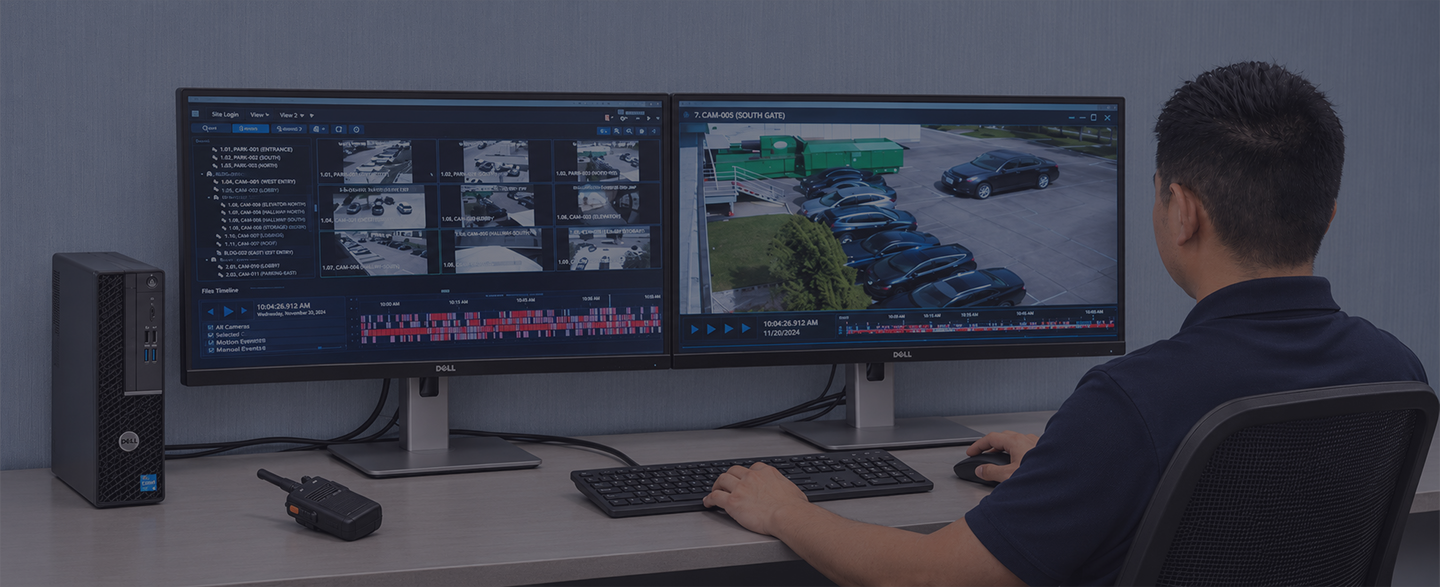
Reviewing surveillance footage can be a lengthy process, particularly when businesses operate multiple cameras that record continuously. AI-powered video search tools can help security teams locate relevant events more efficiently by organizing footage around detected objects and activities.
For example, instead of reviewing several hours of recordings to identify when a vehicle entered a parking area, authorized personnel may be able to filter footage for vehicle-related events. This can reduce the time needed to locate relevant recordings during an investigation.
The sophistication of these tools varies significantly between surveillance platforms. Businesses should evaluate search capabilities during product demonstrations to understand what information can actually be retrieved and how accurately the system performs.
Benefits of AI Security Cameras for Businesses
AI-powered surveillance can offer several operational advantages when implemented appropriately. While the value depends on the business environment and selected technology, the following benefits are among the most relevant for commercial properties.
More Proactive Security Monitoring
Traditional surveillance often focuses on recording events so footage can be reviewed afterward. AI-powered systems can support a more proactive approach by identifying certain activities as they occur and notifying security personnel when predefined conditions are met.
For example, an AI-enabled camera monitoring a restricted entrance may detect unauthorized presence and generate an alert before the individual leaves the area. This gives security teams an opportunity to assess the situation sooner, although the effectiveness of any response depends on staffing, alert delivery, and operational procedures.
Reduced Manual Footage Review
Businesses with multiple cameras can accumulate substantial amounts of surveillance footage. Reviewing these recordings manually can require significant time, particularly when investigating incidents across several locations.
AI video analytics can help narrow the search by identifying relevant objects, events, or activity patterns. Instead of examining every recording, security personnel can focus on footage associated with specific detection criteria, potentially improving investigation efficiency.
Better Visibility Across Large Properties
Warehouses, industrial facilities, office complexes, and multi-building commercial properties may have numerous areas requiring surveillance. Monitoring all these locations simultaneously can be challenging for security personnel, especially when camera coverage is extensive.
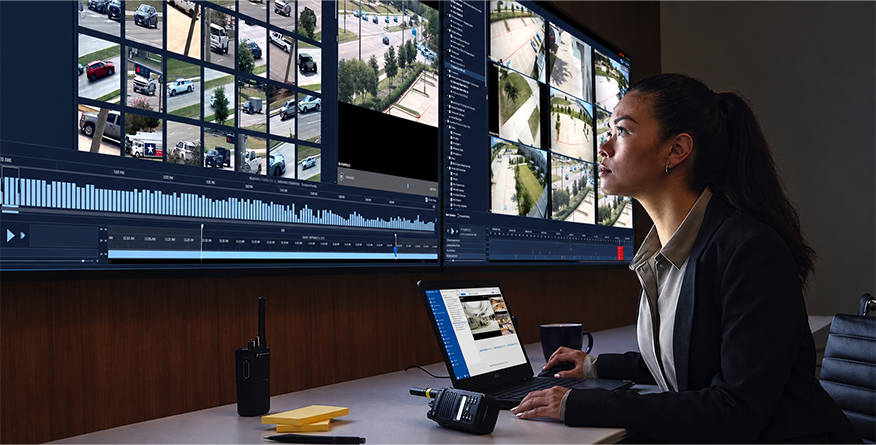
AI-enabled surveillance systems can help identify activity across multiple monitored areas and surface relevant events through centralized management platforms. This allows authorized personnel to prioritize alerts and maintain awareness of selected security conditions without continuously watching every camera feed.
Improved Operational Insights
In addition to supporting security monitoring, some AI surveillance systems offer analytics that can help businesses understand activity within their facilities. Depending on the technology and applicable privacy requirements, these capabilities may include occupancy estimates, people counting, vehicle activity analysis, or movement trends.
For example, a commercial facility may use occupancy information to understand how certain spaces are utilized throughout the day. Retail businesses may use supported analytics to evaluate visitor traffic patterns, while industrial properties may monitor vehicle movement around designated areas.
These insights can support operational planning, but businesses should ensure that the selected technology is appropriate for the intended purpose and that its use complies with applicable privacy requirements.
AI Security Cameras vs. Traditional Security Cameras
Both traditional and AI-enabled cameras can play important roles in commercial security. The main difference is the extent to which the system can analyze footage and identify events automatically.
| Feature | Traditional Security Cameras | AI Security Cameras |
|---|---|---|
| Video recording | Yes | Yes |
| Basic motion detection | Commonly available | Commonly available |
| Person and vehicle detection | Depends on system | Common in AI-enabled models |
| Intelligent video search | Often limited | Available on supported platforms |
| Automated event classification | Limited or unavailable | Available depending on analytics |
| Behavioral analytics | Generally unavailable | Available on some advanced systems |
| Manual footage review | Often required | Can be reduced through AI search |
| Installation complexity | Varies | May require additional configuration |
| Cost | Often lower for basic systems | May involve higher equipment or software costs |
AI security cameras are not necessarily the best choice for every application. A small commercial property with straightforward monitoring requirements may find that conventional IP cameras provide sufficient coverage, while a large facility with numerous cameras and restricted areas may benefit more from advanced video analytics.
The decision should depend on the property’s security risks, operational requirements, available budget, and the specific capabilities needed.
Where Are AI Security Camera Systems Used?
AI surveillance technology can support security requirements across a wide range of commercial environments. Different industries use these capabilities in different ways, depending on property size, security risks, and operational priorities.
Warehouses and Distribution Centers
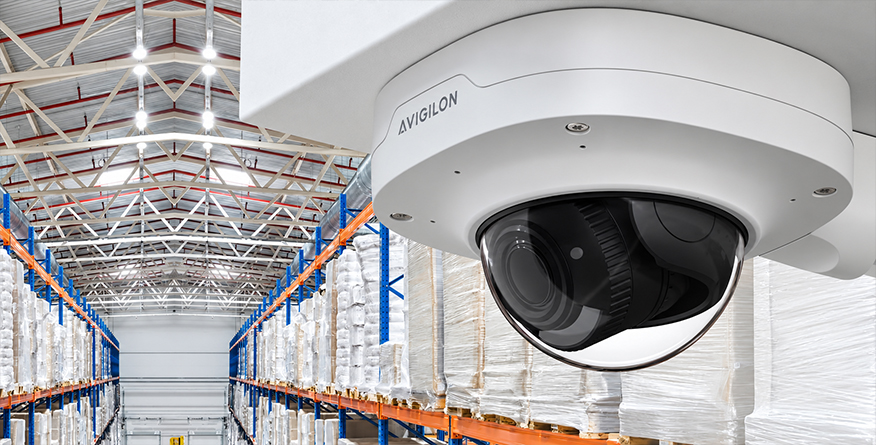
Warehouses often contain valuable inventory, loading equipment, and multiple access points that require monitoring. AI security cameras can help identify activity around loading docks, storage areas, and exterior perimeters, particularly outside normal operating hours.
Facilities may also use intelligent video search to investigate incidents involving vehicles or individuals entering designated areas. When combined with access control, surveillance footage can provide additional context around entry events.
Office Buildings
Office buildings may use AI-enabled surveillance to monitor entrances, common areas, parking facilities, and other shared spaces. Intelligent detection can help identify activity in restricted areas while supporting broader security operations.
When integrated with compatible access control systems, surveillance platforms may also help security personnel review events associated with specific entrances. This can be particularly useful for commercial buildings with multiple tenants or varying access permissions.
Retail Stores
Retail businesses can use AI surveillance to monitor entrances, stockrooms, sales floors, and other important areas. Depending on the platform, intelligent analytics may help identify activity in restricted locations and make it easier to retrieve footage associated with specific incidents.
Some systems also offer people-counting or traffic analysis capabilities that may provide operational insights. However, businesses should evaluate the accuracy and privacy implications of these features before implementation.
Manufacturing and Industrial Facilities
Manufacturing facilities often need to secure production areas, equipment storage, and operational infrastructure. AI-enabled surveillance can support these requirements by monitoring designated zones and generating alerts when people or vehicles enter restricted locations.
In certain environments, specialized video analytics may also support operational or safety monitoring. These capabilities should be evaluated separately from general security detection, particularly when they are intended to identify safety-related events.
Healthcare and Educational Facilities
Healthcare and educational properties may use AI surveillance to monitor entrances, parking areas, building perimeters, and other authorized security zones. These facilities often have complex requirements involving access permissions, visitor movement, and sensitive areas.
Security system design should account for the specific privacy, regulatory, and operational requirements of each environment. AI-enabled monitoring should be implemented with appropriate safeguards, clearly defined purposes, and access restrictions.
What to Consider Before Installing AI Security Cameras
Although AI surveillance offers useful capabilities, selecting the right system requires careful planning. Businesses should evaluate their security objectives, existing infrastructure, and long-term operational requirements before making an investment.
Identify Your Security Requirements
The first step is understanding what the business needs its security system to accomplish. A warehouse concerned about after-hours perimeter access may benefit from intrusion detection, while an office building may prioritize entrance monitoring and integration with access control.
Defining these requirements helps determine which AI features are relevant and prevents businesses from paying for capabilities they may not need. A professional security assessment can help identify vulnerabilities and establish priorities before equipment is selected.
Evaluate Camera Placement and Image Quality
AI analytics depend on the visual information captured by surveillance cameras. Poor lighting, obstructed views, unsuitable camera angles, and inadequate image resolution can affect detection accuracy.
For example, a camera installed too far from a monitored entrance may struggle to provide the image detail needed for reliable object classification. Businesses should work with experienced installers to determine suitable camera locations and verify that the system performs as expected under real operating conditions.
Consider Storage and Network Requirements
AI-enabled surveillance systems may require network bandwidth, recording capacity, and processing resources beyond those needed for basic installations. Requirements depend on camera resolution, recording settings, retention periods, and whether video analytics are processed locally or through external platforms.
Businesses should also evaluate whether the proposed system is compatible with their existing network infrastructure. Understanding storage, processing, and connectivity requirements in advance can help prevent performance issues after installation.
Understand Privacy and Cybersecurity Responsibilities
AI surveillance systems may process information involving employees, customers, visitors, and other individuals. Businesses should understand how video data is collected, stored, accessed, and retained, particularly when advanced analytics or cloud-connected services are involved.
Security measures such as strong authentication, appropriate user permissions, firmware updates, and secure network configuration can help protect surveillance infrastructure. Businesses should also review applicable privacy laws and establish clear policies governing the use of recorded footage and analytics.
Plan for Future Expansion
Commercial security requirements can change as businesses expand, introduce new operational areas, or open additional locations. A surveillance system that meets current needs should ideally support future growth without requiring extensive replacement.
Before investing, ask whether the proposed platform can accommodate additional cameras, analytics capabilities, storage, and integration with other security technologies. Considering scalability early can help businesses avoid unnecessary complications and expenses later.
Are AI Security Cameras Worth the Investment?
Whether AI security cameras are worth the investment depends on the size of the property, the security challenges involved, and the capabilities the business actually needs. Advanced surveillance technology can offer meaningful benefits, but those benefits should be evaluated against equipment costs, installation requirements, software licensing, and ongoing maintenance.
For businesses managing large facilities, multiple entrances, or extensive surveillance networks, AI analytics may help reduce manual monitoring requirements and improve the efficiency of incident investigations. The ability to identify selected events automatically can be particularly useful when security personnel cannot continuously observe every camera feed.
However, smaller businesses with limited surveillance requirements may not need the most advanced AI features. In these cases, a properly designed conventional surveillance system may provide adequate protection at a lower cost.
The most effective approach is to evaluate specific security risks and determine which technologies address them. Rather than investing in AI simply because it is available, businesses should focus on measurable operational benefits, system reliability, and long-term suitability.
Explore Commercial Security Solutions With Electro Specialty Systems
AI-powered surveillance is creating new opportunities for businesses to improve security monitoring and make better use of recorded video. However, choosing the right technology and implementing it effectively requires careful consideration of the property’s layout, existing infrastructure, and operational requirements.
At Electro Specialty Systems (ESS), we help businesses in San Diego implement commercial video surveillance and access control solutions. Working with technologies from Motorola Solutions and Avigilon, our team helps commercial properties explore security systems designed around their specific needs.
Whether you are planning a new commercial security camera installation, upgrading an existing surveillance system, or exploring AI-enabled video analytics, ESS can help you evaluate suitable security technologies for your facility.
Contact Electro Specialty Systems today to discuss your commercial security requirements and explore surveillance solutions for your business.