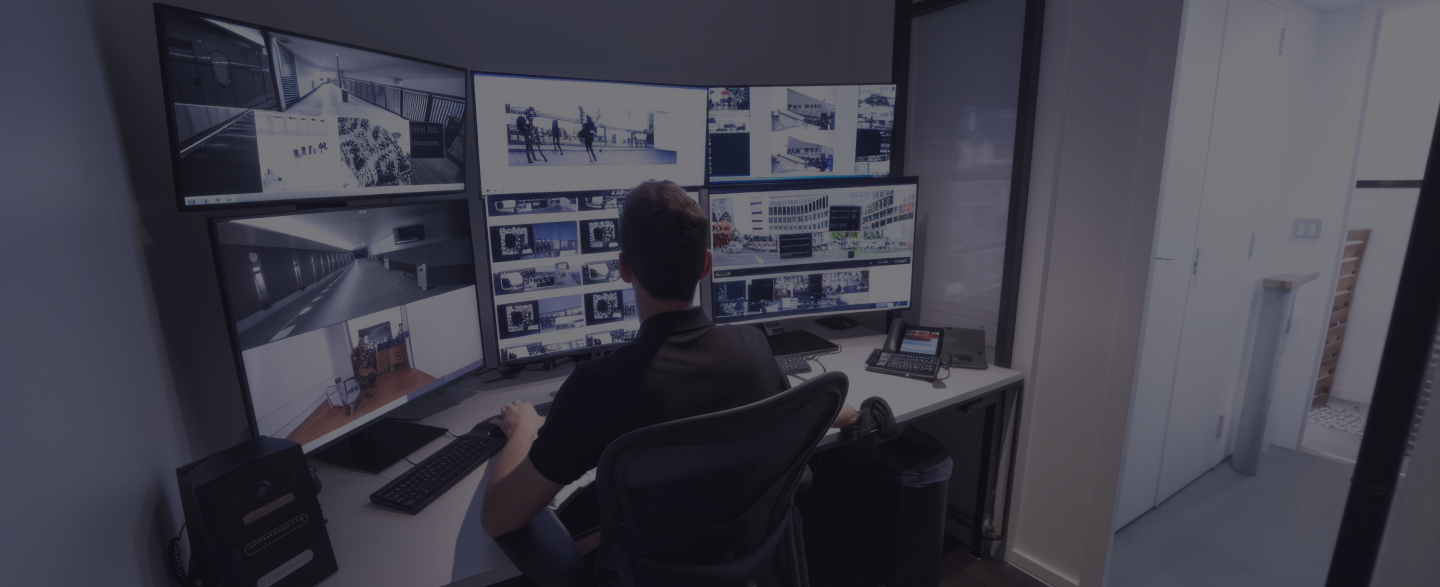
How to Choose the Right Video Surveillance System for Your Facility
Choosing a video surveillance system isn’t just about buying cameras. It’s about building a security infrastructure that protects people, assets, and operations across your facility. Whether you’re securing a university campus, corporate office, government building, or stadium, the right system provides real-time monitoring, post-incident review, and integration with other security technologies.
But with hundreds of camera models and recording platforms available, how do you choose what’s right for your facility?
At Electro Specialty Systems (ESS), we’ve designed and installed surveillance systems for San Diego State University, Snapdragon Stadium, Petco Park, and other mission-critical facilities. Here’s what we’ve learned about making the right choice.
Match Your System to Your Security Goals
Before choosing cameras, define what you need the system to accomplish. Universities require campus-wide monitoring and emergency coordination. Corporate facilities need perimeter security and access point verification. Stadiums demand crowd management and real-time threat detection. Government buildings require compliance-ready systems with detailed audit trails.
Start with objectives, not technology. Camera specs, storage, and analytics follow from there.
Choose the Right Cameras for Each Environment
Indoor cameras offer high resolution and advanced analytics but aren’t built for weather or vandalism. Outdoor cameras need IP66/IP67 weatherproof ratings, temperature controls, and tamper-resistant housings.
Specialized environments require specialized cameras: parking garages need wide angle low light cameras, loading docks require rugged all weather units, and stadiums benefit from PTZ (pan-tilt-zoom) cameras that track activity across large spaces.
Resolution: Balance Detail With Cost
Higher resolution means larger files, more storage, and higher bandwidth. Choose resolution based on what you need to see:
- 1080p (2 MP): Standard for most commercial applications
- 4-5 MP: Face recognition, license plate reading, critical entry points
- 4K (8 MP): Large outdoor areas, forensic-level detail, digital zoom capabilities
Use higher resolution at critical points entrances, exits, high security zones and standard resolution for general coverage.
Storage: Plan for Compliance and Incident Review
Video retention requirements vary by industry. Schools often retain 30-90 days for Title IX compliance. Government buildings may require 90+ days. Corporate facilities typically store 30-60 days.
Your storage needs depend on camera count, resolution, and retention period. Choose between on-premise NVRs (you control the data), cloud storage (easier remote access), or hybrid systems (local + cloud backup for redundancy).
ESS typically recommends hybrid systems for enterprise client’s local storage for fast playback, cloud backup for compliance and disaster recovery.
Analytics: Beyond Basic Recording
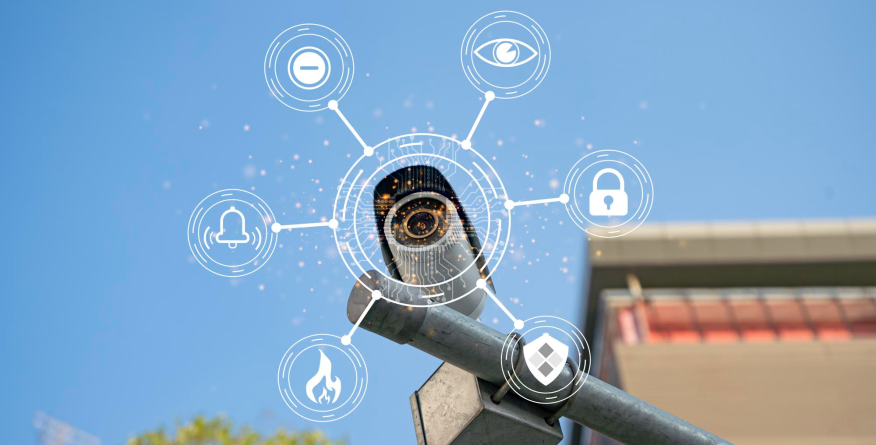
Modern surveillance systems can detect events, not just record them. Motion detection reduces storage but can trigger false alarms. Behavior analytics detect loitering, wrong way movement, or running helping operators focus on real threats.
Advanced features include facial recognition (high-security environments), license plate recognition (parking/perimeter control), and smoke/fire detection (faster alerts than traditional systems).
The question: Do you need real-time alerts or just post-incident review? If your team actively monitors cameras, analytics improve response. If the system is for investigation only, basic recording may suffice.
Integration: One Platform, Unified Security
Surveillance works best when integrated with other security systems. When someone badges into a restricted area, cameras automatically display that entry point. When a door alarm triggers, video from that zone appears instantly. During emergencies, cameras help identify threats and coordinate mass notifications.
At ESS, we design systems where access control, intrusion detection, gunshot detection, and video surveillance operate from one centralized platform with faster response, less operator fatigue, and no siloed systems.
Scalability, Support, and Total Cost
Your security needs will evolve. Can the system add more cameras without replacing infrastructure? Does your network support additional high-resolution feeds? Can storage expand without overhauling hardware?
Support matters as much as equipment. When a camera fails before a major event, can you get same day service? Who handles firmware updates? Are replacement parts stocked locally or shipped from out of state?
Budget for total cost of ownership not just upfront expenses. Consider cameras, installation, network upgrades, ongoing storage, maintenance contracts, and eventual replacements. A slightly higher initial investment in scalable, well-integrated systems saves tens of thousands in avoided retrofits and compatibility fixes.
The ESS Difference: Design First, Install Second
At Electro Specialty Systems, we don’t sell cameras, we design security infrastructures. Every project starts with a site assessment: we walk your facility, interview stakeholders, review compliance requirements, and design a custom solution that balances coverage, budget, and long term goals.
We’ve deployed surveillance systems for SDSU’s 35,000-student campus, Snapdragon Stadium, Petco Park, San Diego Unified School District, and defense contractors requiring high-assurance compliance. Whether you’re securing a single building or a sprawling campus, we bring the same precision, professionalism, and 24/7 support.
Ready to Design Your Surveillance System?
Choosing the right video surveillance system doesn’t have to be overwhelming. With the right partner, you can build a system that protects your facility today and scales with your needs tomorrow.
Contact ESS to schedule a site assessment. We’ll walk your facility, understand your security goals, and provide a transparent proposal that fits your budget and timeline.